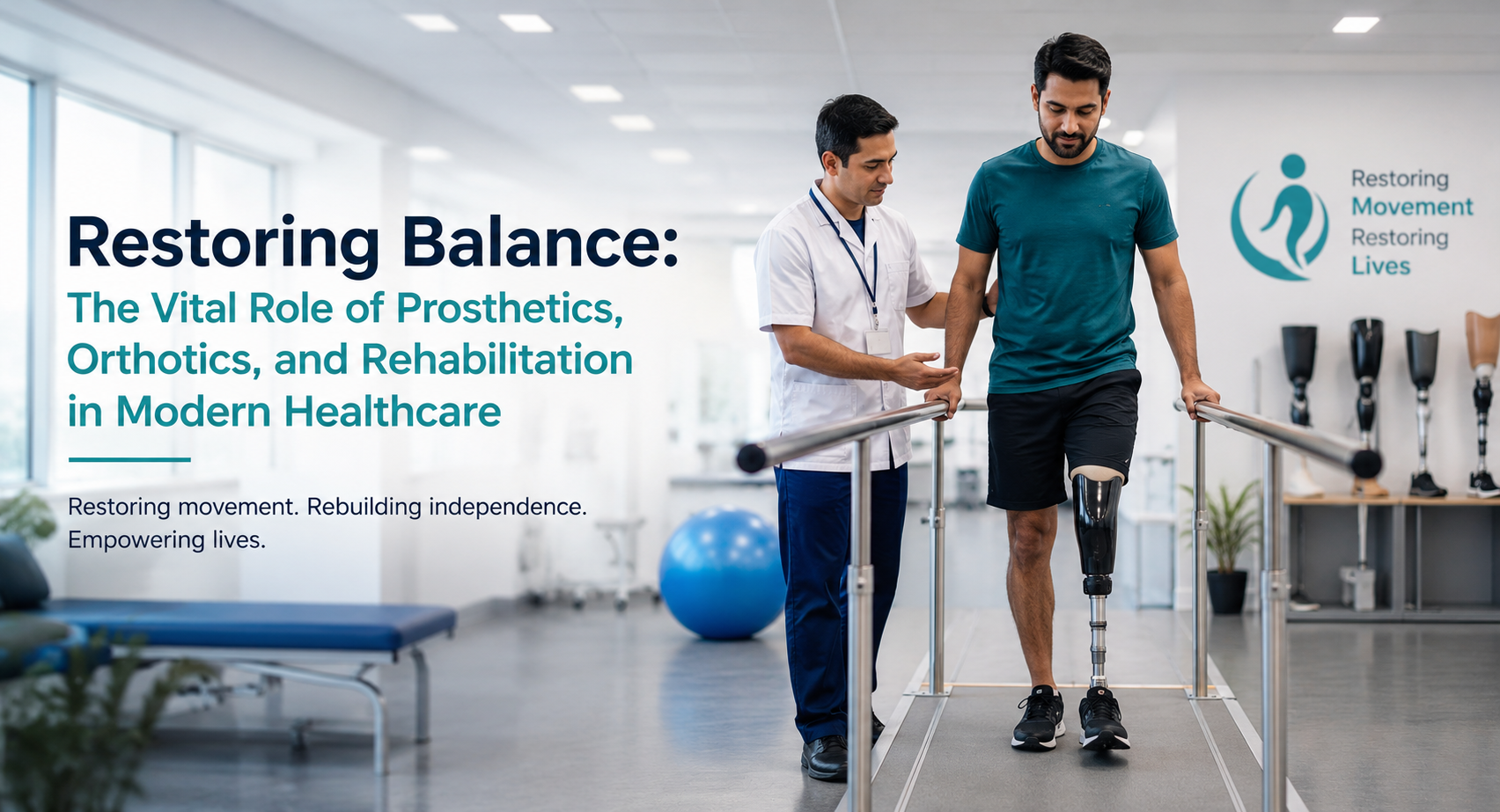
Clinical Article 01 • Prosthetics • Orthotics • Rehabilitation
Restoring Balance: The Vital Role of Prosthetics, Orthotics, and Rehabilitation in Modern Healthcare
Movement is one of the greatest gifts of human life. Every step we take, every object we hold, and every activity we perform depends on the balance between our bones, muscles, joints, nerves, and brain.
Article Contents
Introduction What Are Prosthetics? What Are Orthotics? Why Rehabilitation Matters Modern Technology Evidence-Based Practice Professional Philosophy Final ThoughtsIntroduction
When illness, injury, congenital conditions, neurological disorders, or amputation disturb this natural balance, the impact extends far beyond physical mobility. It can affect confidence, independence, employment, emotional well-being, and overall quality of life.
Prosthetics, Orthotics, and Rehabilitation are healthcare disciplines that work together to restore movement, protect the body, improve function, and support individuals in returning to meaningful daily activities.
Rehabilitation is not only about providing a device. It is about understanding the person, their goals, their body mechanics, their environment, and their journey toward independence.
What Are Prosthetics?
Prosthetics is the clinical discipline focused on replacing missing limbs with artificial devices known as prostheses. These devices are designed to restore function, improve mobility, reduce energy expenditure, and help individuals regain independence.
A prosthesis must be carefully selected, designed, aligned, and trained according to the patient’s physical condition, lifestyle, functional goals, and rehabilitation potential.
Examples of Prosthetic Solutions
- Below-knee prostheses
- Above-knee prostheses
- Upper limb prostheses
- Sports prostheses
- Waterproof prosthetic systems
- Microprocessor-controlled knees
- Energy-storing carbon fiber feet
What Are Orthotics?
Orthotics involves the design and fitting of external medical devices that support, align, protect, or improve the function of the musculoskeletal and neurological systems.
Unlike prostheses, orthoses work with the existing limb or body segment. They may help control deformity, improve alignment, reduce pain, stabilize weak joints, and improve safe movement.
Examples of Orthotic Devices
- Custom foot orthoses and insoles
- Ankle-foot orthoses
- Knee braces
- Knee-ankle-foot orthoses
- Spinal braces
- Wrist and hand orthoses
- Pediatric orthoses
- Diabetic foot orthoses
Why Rehabilitation Matters
A well-designed prosthesis or orthosis alone is not enough. Successful rehabilitation requires comprehensive assessment, accurate prescription, proper fitting, alignment, training, education, and long-term follow-up.
Rehabilitation focuses on helping each individual achieve their personal goals, whether that means walking independently, returning to work, participating in sports, performing daily activities, or improving comfort and safety.
Technology Is Transforming Rehabilitation
Modern rehabilitation continues to improve through advances in digital tools, materials, biomechanics, and clinical measurement systems. These technologies support more accurate, comfortable, and personalized treatment.
- Digital 3D scanning
- CAD/CAM design
- Carbon fiber materials
- Silicone suspension systems
- Pressure mapping
- Computerized gait analysis
- Microprocessor prosthetic components
The Importance of Evidence-Based Practice
Evidence-based practice combines current research, clinical expertise, patient goals, and measurable outcomes. This approach ensures that every treatment decision is guided by knowledge, experience, and the individual needs of the patient.
In Prosthetics and Orthotics, evidence-based care helps clinicians choose appropriate devices, improve function, reduce complications, and provide meaningful patient-centered outcomes.
My Professional Philosophy
Throughout my professional journey, I have learned that every patient has a unique story. Some want to return to work. Some want to walk independently again. Others simply want to reduce pain, improve confidence, or participate more fully in family and community life.
As Prosthetists and Orthotists, our responsibility extends beyond designing devices. We restore confidence, preserve dignity, encourage independence, and improve quality of life.
Key Takeaways
- Prosthetics replace missing limbs and support functional mobility.
- Orthotics support, align, protect, and improve existing body function.
- Rehabilitation is essential for long-term success.
- Modern technology improves accuracy, comfort, and outcomes.
- Patient-centered care is the foundation of meaningful rehabilitation.
Final Thoughts
Prosthetics, Orthotics, and Rehabilitation represent more than medical technology. They represent hope, resilience, innovation, and human potential.
Rehabilitation is not simply about restoring movement. It is about restoring possibility.