Clinical Article 02 • Orthotics • Rehabilitation
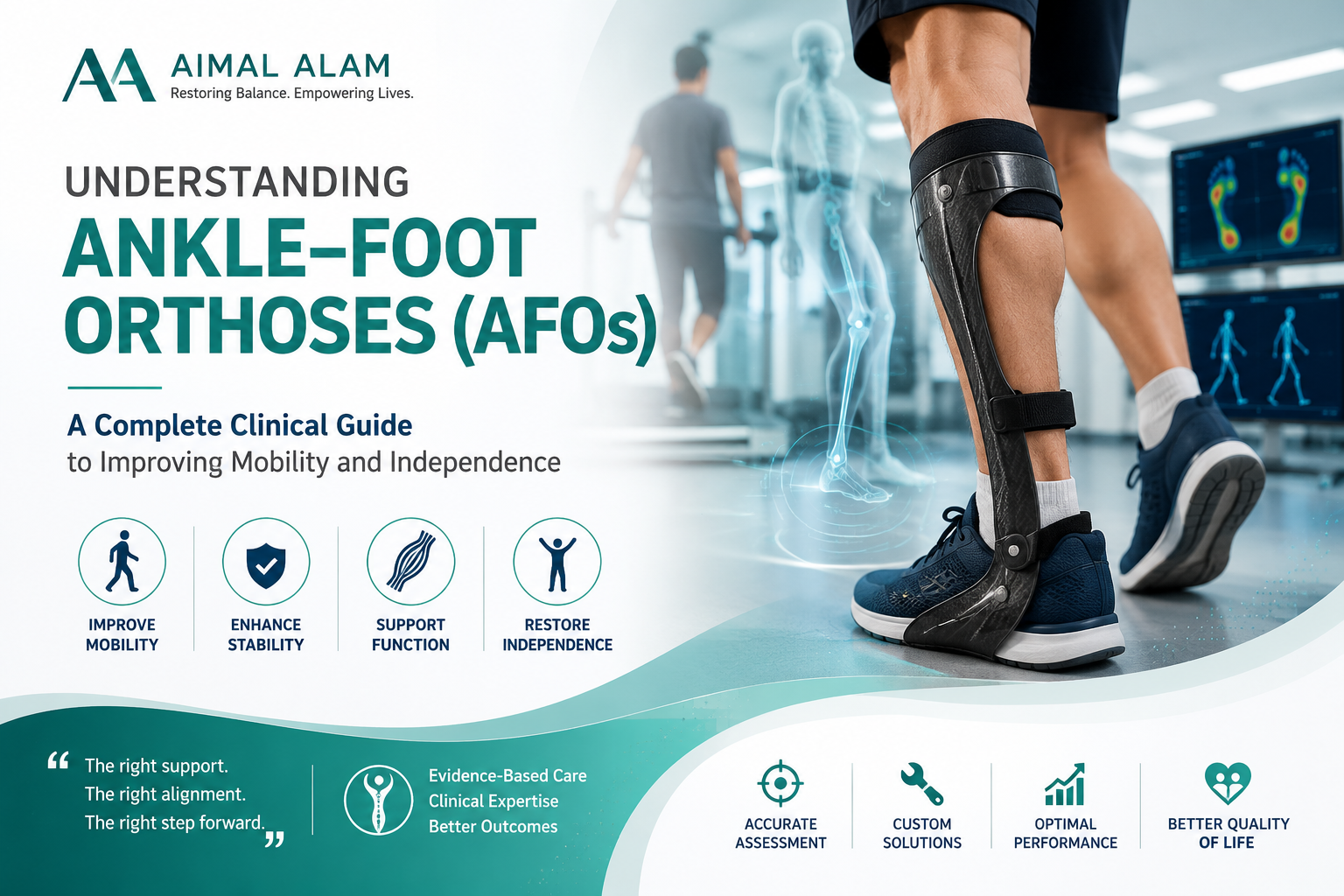
Understanding Ankle-Foot Orthoses (AFOs): A Complete Clinical Guide to Improving Mobility and Independence
Ankle-Foot Orthoses, commonly known as AFOs, are among the most important orthotic devices used in rehabilitation. They help support the ankle and foot, improve walking safety, enhance stability, and promote better mobility for people with weakness, deformity, neurological conditions, or gait difficulties.
Article Contents
What Is an AFO? Conditions That May Require an AFO Types of AFOs Benefits of an AFO Clinical Assessment Rehabilitation Beyond the Device Caring for Your AFO Final ThoughtsWhat Is an AFO?
An Ankle-Foot Orthosis is an external medical device designed to support the ankle and foot. It may control unwanted movement, improve foot clearance during walking, support weak muscles, reduce instability, and assist with safer and more efficient gait.
AFOs are commonly prescribed when the muscles around the ankle and foot are weak, imbalanced, or unable to provide enough control during standing and walking. The goal is not simply to restrict movement, but to improve function.
Conditions That May Require an AFO
AFOs may be used for children and adults with different neurological, orthopedic, and musculoskeletal conditions.
- Foot drop
- Stroke-related weakness
- Cerebral palsy
- Spina bifida
- Peripheral nerve injuries
- Multiple sclerosis
- Muscular dystrophy
- Incomplete spinal cord injury
- Post-operative ankle instability
- Severe ankle weakness or deformity
Types of AFOs
There is no single AFO suitable for every patient. The correct design depends on diagnosis, muscle strength, joint range of motion, spasticity, foot alignment, gait pattern, and functional goals.
Common AFO Designs
- Solid AFO: Provides strong ankle control and stability.
- Hinged AFO: Allows controlled ankle movement when clinically appropriate.
- Posterior Leaf Spring AFO: Assists foot clearance in mild foot drop.
- Carbon Fiber AFO: Lightweight and dynamic, often used for energy return and functional walking.
- Ground Reaction AFO: Helps influence knee stability through control of ground reaction forces.
- Custom Thermoplastic AFO: Individually molded for patient-specific alignment and support.
An AFO should never be selected only by appearance. Proper prescription depends on clinical assessment, gait analysis, muscle strength, joint range of motion, tone, alignment, and the patient’s functional goals.
Benefits of an AFO
A properly prescribed and fitted AFO can significantly improve function and safety during daily activities.
- Improves foot clearance during swing phase
- Enhances ankle and foot stability
- Reduces risk of tripping and falling
- Improves walking efficiency
- Supports better posture and alignment
- Reduces compensatory gait patterns
- Improves confidence during walking
- Supports independence in daily activities
The Importance of Clinical Assessment
Successful AFO management begins with a detailed clinical assessment. The Prosthetist and Orthotist evaluates the patient’s strength, range of motion, balance, tone, deformity, skin condition, footwear, gait pattern, lifestyle, and rehabilitation goals.
A device that works well for one patient may not be suitable for another. This is why individualized prescription is essential. The best AFO is one that supports the person’s function while respecting comfort, safety, and long-term goals.
Rehabilitation Beyond the Device
An AFO is an important tool, but it is only one part of successful rehabilitation. Patients often benefit from physiotherapy, strengthening exercises, balance training, gait re-education, footwear review, and regular clinical follow-up.
When orthotic intervention is combined with rehabilitation, patients are more likely to achieve better mobility, safety, endurance, and confidence.
Caring for Your AFO
Proper care helps improve comfort, safety, and durability of the device.
- Check the skin daily for redness, pressure marks, or irritation.
- Wear appropriate socks as advised by your clinician.
- Use proper footwear that accommodates the AFO.
- Keep the device clean and dry.
- Do not modify the AFO at home.
- Attend follow-up appointments for adjustments.
- Report pain, discomfort, or skin problems early.
Key Takeaways
- AFOs support the ankle and foot to improve walking and stability.
- Different types of AFOs are used for different clinical needs.
- Proper assessment is essential for safe and effective prescription.
- Rehabilitation and follow-up are important for long-term success.
- The goal of an AFO is to improve mobility, confidence, and independence.
Final Thoughts
An Ankle-Foot Orthosis is more than a brace. It is a rehabilitation tool that can improve walking, reduce fall risk, enhance stability, and restore confidence. When prescribed correctly and combined with rehabilitation, an AFO can significantly improve quality of life.
Every patient is unique. The most effective orthotic solution is one that is carefully selected, properly fitted, regularly reviewed, and aligned with the individual’s goals and lifestyle.