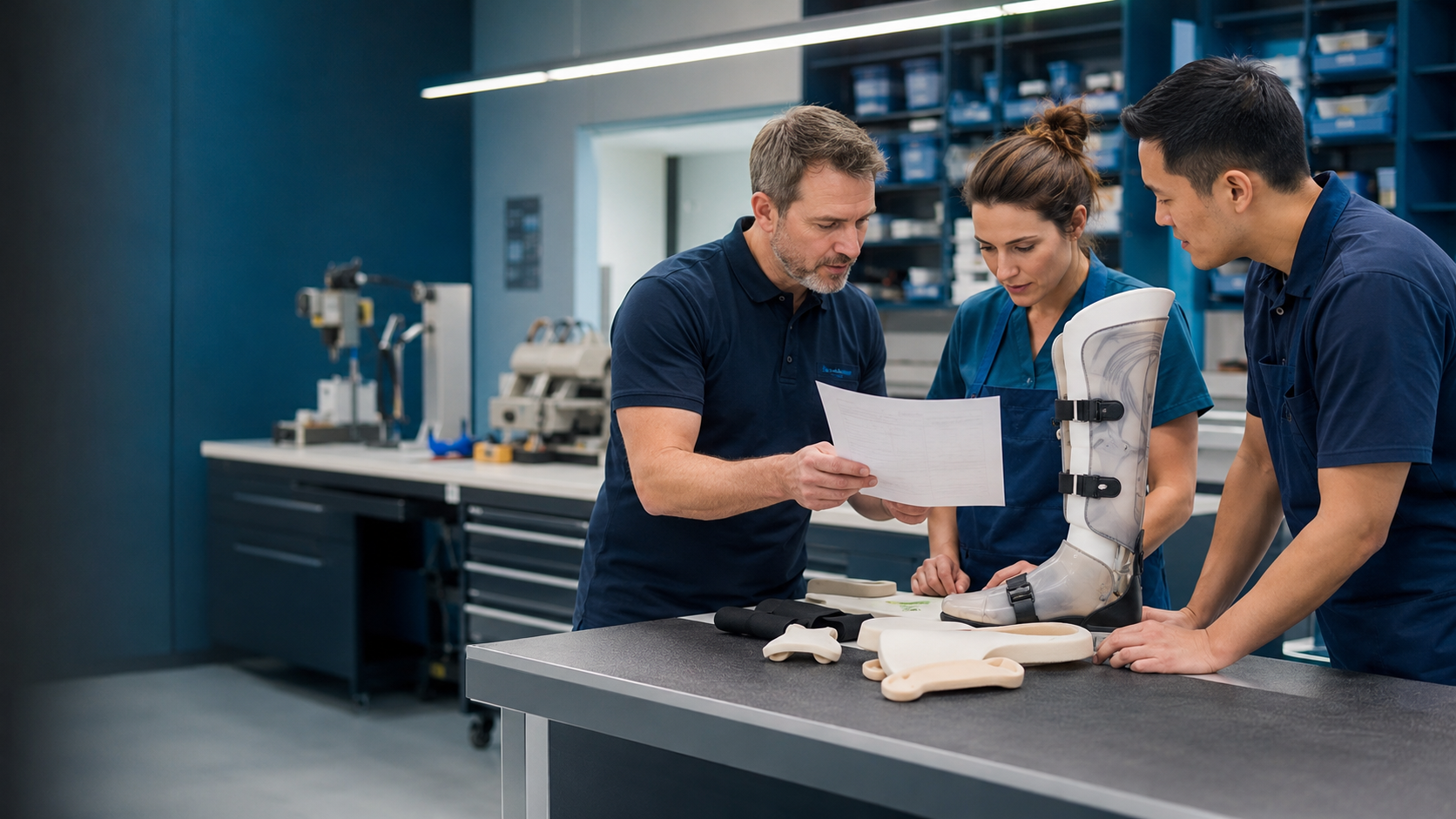
Managing Urgent Post-Operative Orthotic Cases Without Compromising Quality
Urgent postoperative cases are part of real workshop practice. A patient may need protection, positioning or controlled movement before discharge or an early follow-up appointment. The deadline matters—but urgency must never remove the safety checks that protect the patient.
Move quickly through a clear process, not by skipping the process.
Confirm What Is Truly Urgent
The team first confirms the clinical reason, required delivery time and consequence of delay. Priority should reflect patient risk and the treatment plan, not simply the order in which requests arrive.
Clarify the Prescription Early
Before fabrication, confirm diagnosis, surgical precautions, weight-bearing status, permitted joint range, wound or dressing location, swelling, sensitive areas and follow-up plan. One short clinical discussion can prevent hours of incorrect work.
Assign Ownership
A named clinician and technician should own the case. The team agrees who will capture measurements, rectify, fabricate, source components, perform quality checks and arrange fitting. Clear ownership reduces duplication and missed steps.
Plan Around the Critical Path
- Check material, joints, straps and consumables before starting.
- Identify heating, forming, curing or cooling time that cannot be shortened safely.
- Prepare tools and the next workstation while the current stage runs.
- Protect other high-risk cases from being displaced without review.
- Communicate immediately if the clinical deadline becomes unrealistic.
Protect Quality Gates
Even under pressure, the device requires verification of identity, side, prescription, alignment, dimensions, range stops, fasteners, edges, padding and structural integrity. A second-person check is particularly valuable for postoperative restrictions.
Correct patient and side, surgical restrictions, structural safety, skin protection, correct joint function, clinical fitting and documented delivery instructions.
Fit, Educate and Document
The fitting should check access around dressings, pressure, alignment, comfort and the intended control. The patient, family or clinical team needs clear instructions on application, wearing schedule, skin checks and warning signs. Any deviation from the prescription must be clinically approved and recorded.
Review After Delivery
A short team review asks what created urgency, what worked, where time was lost and which stock, templates or communication steps could improve the next case. The aim is learning, not blame.
My Workshop Reflection
The strongest response to urgent work is calm teamwork. When the clinical branch and fabrication lab share accurate information and priorities, the workshop can act faster while preserving the craftsmanship and safety every patient deserves.
This blog shares general professional experience. It does not disclose patient details or replace workplace procedures and qualified clinical decisions.