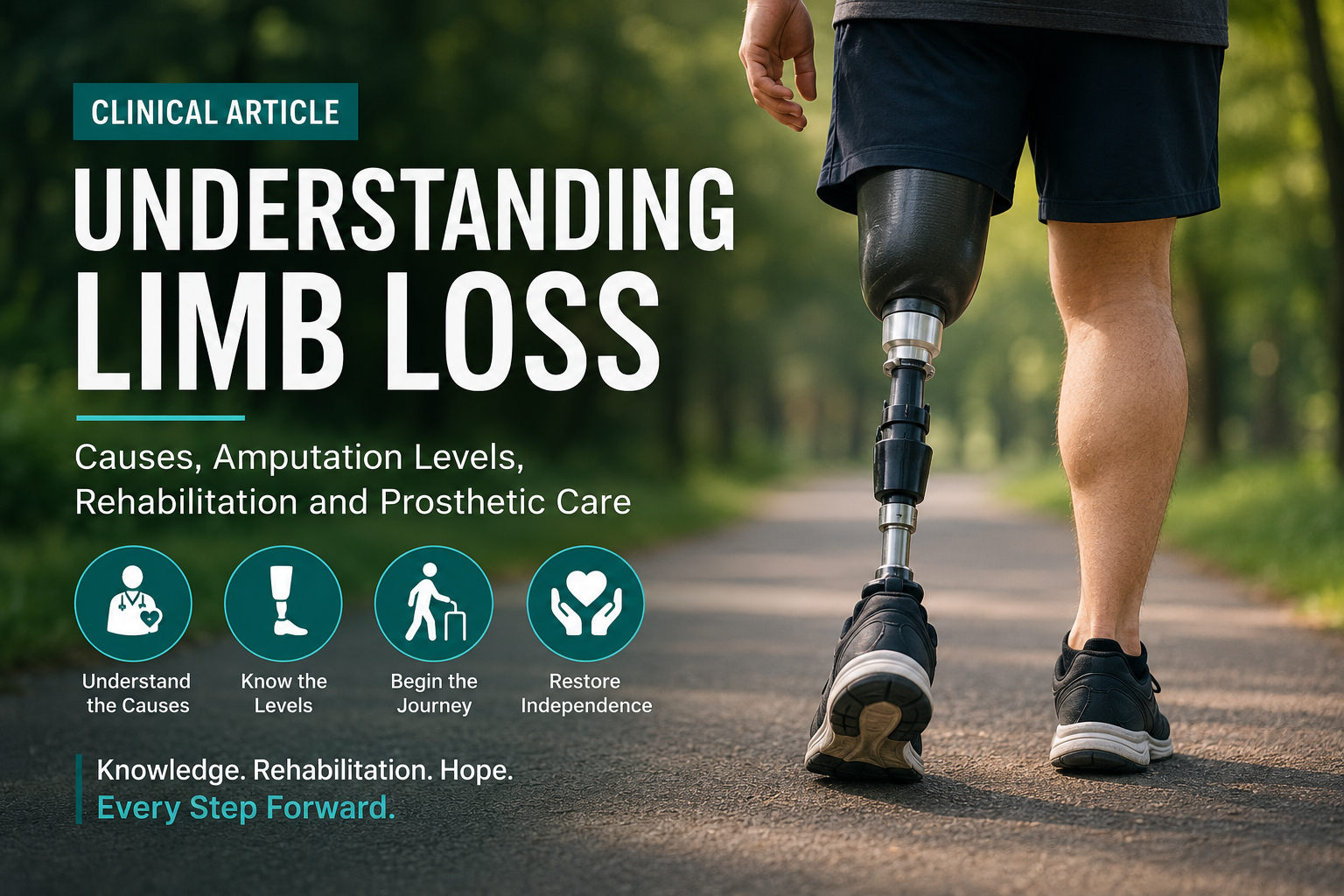
What Is Limb Loss?
Limb loss refers to the complete or partial absence of an arm, hand, leg or foot. It may be present from birth, occur because of illness or result from injury or surgery.
The experience of limb loss is different for every person. It can affect mobility, independence, work, family life, self-confidence and emotional wellbeing. However, with the right medical care, rehabilitation, prosthetic treatment and personal support, many people successfully return to active and meaningful lives.
Common Causes of Limb Loss
Limb loss may happen for several reasons. The most common causes include vascular disease, diabetes, trauma, infection, cancer and congenital limb difference.
Diabetes and vascular disease
Diabetes and poor blood circulation can reduce healing ability and increase the risk of foot wounds, infection and tissue damage. When a serious wound cannot heal or infection threatens the person's health, amputation may become necessary.
Traumatic injury
Road traffic accidents, workplace injuries, machinery accidents, burns, explosions and other major injuries can cause severe damage to bones, muscles, nerves and blood vessels.
Infection
Severe infection can spread rapidly and may place the person's life at risk. In some cases, removing the affected part of the limb is necessary to control the infection.
Cancer
Certain bone and soft-tissue cancers may require surgical removal of part of a limb to control the disease.
Congenital limb difference
Some children are born with a limb that has not fully developed. These children may benefit from prosthetic, orthotic, physiotherapy and occupational therapy support as they grow.
Levels of Lower-Limb Amputation
The level of amputation describes where the limb has been surgically removed. The level influences prosthetic design, energy requirements, balance, rehabilitation goals and walking potential.
| Amputation Level | Description | Clinical Consideration |
|---|---|---|
| Partial Foot | Removal of part of the foot while preserving part of the natural foot structure. | Footwear modification, fillers or partial-foot prostheses may assist balance and progression. |
| Transtibial | Amputation below the knee with preservation of the knee joint. | Preserving the knee generally supports more efficient walking and improved functional potential. |
| Knee Disarticulation | Amputation through the knee joint. | Provides end-bearing potential but may create challenges related to prosthetic knee placement and appearance. |
| Transfemoral | Amputation above the knee through the thigh. | Requires both a prosthetic socket and prosthetic knee, increasing the demands of balance and gait training. |
| Hip Disarticulation | Removal of the entire lower limb through the hip joint. | Requires a specialized prosthesis and significant rehabilitation because of increased energy demands. |
Levels of Upper-Limb Amputation
Upper-limb loss can affect grasp, reaching, carrying, dressing, writing, work and many other daily activities.
- Partial hand or finger loss.
- Wrist disarticulation.
- Transradial amputation below the elbow.
- Elbow disarticulation.
- Transhumeral amputation above the elbow.
- Shoulder disarticulation.
- Forequarter amputation.
The rehabilitation plan depends on the level of limb loss, the person's goals, the condition of the remaining limb and the activities they wish to perform.
The Rehabilitation Journey
Rehabilitation is not one single treatment. It is a coordinated process involving medical care, wound healing, therapy, prosthetic management, education and emotional support.
1. Surgical and Medical Care
The initial priority is healing, pain control, infection prevention and management of any underlying medical condition.
2. Residual Limb Management
Swelling control, positioning, shaping, skin care and maintaining joint movement help prepare the limb for future prosthetic fitting.
3. Physical Rehabilitation
Therapy works on strength, balance, transfers, mobility, endurance and safe movement before and after prosthetic fitting.
4. Prosthetic Assessment
The prosthetist evaluates the residual limb, strength, lifestyle, goals, environment and functional potential.
5. Prosthetic Fitting
A customized socket and suitable components are selected to provide comfort, stability and function.
6. Training and Follow-Up
Patients learn how to use, clean and maintain the prosthesis. Regular reviews are essential because the residual limb and functional needs can change.
What Is a Residual Limb?
The residual limb is the part of the arm or leg that remains after amputation. Its health is essential for prosthetic comfort and function.
Residual limb care usually includes:
- Daily washing and careful drying.
- Regular skin inspection.
- Swelling management.
- Maintaining joint range of motion.
- Preventing contractures.
- Reporting wounds, blisters or unusual pain early.
How a Prosthesis Can Help
A prosthesis is an artificial limb designed to replace part of the function and appearance of a missing limb.
Depending on the person's needs, a prosthesis may help with:
- Standing and walking.
- Balance and transfers.
- Grasping and carrying objects.
- Personal care and household activities.
- Work, education and community participation.
- Sports and recreational activities.
Not every patient needs the same type of prosthesis. Component selection should be based on realistic goals, safety, strength, environment and the person's ability to use the device.
Prosthetic Assessment and Prescription
A detailed assessment helps the prosthetist determine whether a prosthesis is appropriate and which design may provide the best clinical outcome.
Assessment may include:
- Amputation level and residual limb condition.
- Skin health and wound healing.
- Muscle strength and joint range of motion.
- Balance and mobility.
- Medical conditions and pain.
- Home, work and community environment.
- Personal goals and expectations.
- Ability to understand and manage the device.
Emotional and Psychological Adjustment
Limb loss can affect confidence, identity, relationships and emotional wellbeing. Feelings such as sadness, fear, frustration and uncertainty are understandable.
Support may come from family, friends, rehabilitation professionals, counsellors, psychologists and peer-support groups. Meeting other people who have experienced limb loss can provide reassurance and practical guidance.
Phantom Sensation and Phantom Limb Pain
Phantom sensation means feeling that the missing limb is still present. Phantom limb pain refers to painful sensations that appear to come from the missing part of the limb.
Management may include medical review, medication, desensitization, mirror therapy, graded movement, psychological support and other rehabilitation strategies. Persistent or severe pain should always be discussed with the treating healthcare team.
Preventing Secondary Complications
After limb loss, patients may place more demand on the remaining limb and other joints. This can contribute to overuse, back pain, poor posture, falls or skin problems.
Prevention includes:
- Maintaining a healthy body weight.
- Using appropriate footwear.
- Inspecting the remaining foot or hand regularly.
- Following strengthening and flexibility exercises.
- Using the prosthesis according to professional guidance.
- Attending regular prosthetic and rehabilitation reviews.
The Importance of a Multidisciplinary Team
Successful rehabilitation often involves several professionals working together.
- Surgeons and physicians.
- Prosthetists and orthotists.
- Physiotherapists.
- Occupational therapists.
- Nurses and wound-care specialists.
- Psychologists and counsellors.
- Social workers.
- Peer-support representatives.
Coordinated care helps ensure that the patient's medical, physical, emotional and social needs are considered.
Living Well After Limb Loss
Life after limb loss involves adaptation, learning and ongoing support. Progress may happen gradually, and goals may change over time.
With appropriate rehabilitation and access to suitable technology, people with limb loss can return to family roles, work, education, driving, recreation, sports and community life.
Conclusion
Understanding limb loss is the first step toward effective rehabilitation. The cause and level of amputation, residual limb condition, medical health, personal goals and available support all influence the rehabilitation pathway.
Prosthetic care is most successful when it is individualized, realistic and supported by a multidisciplinary team. The ultimate goal is not only to replace a missing limb, but to restore function, confidence, participation and independence.