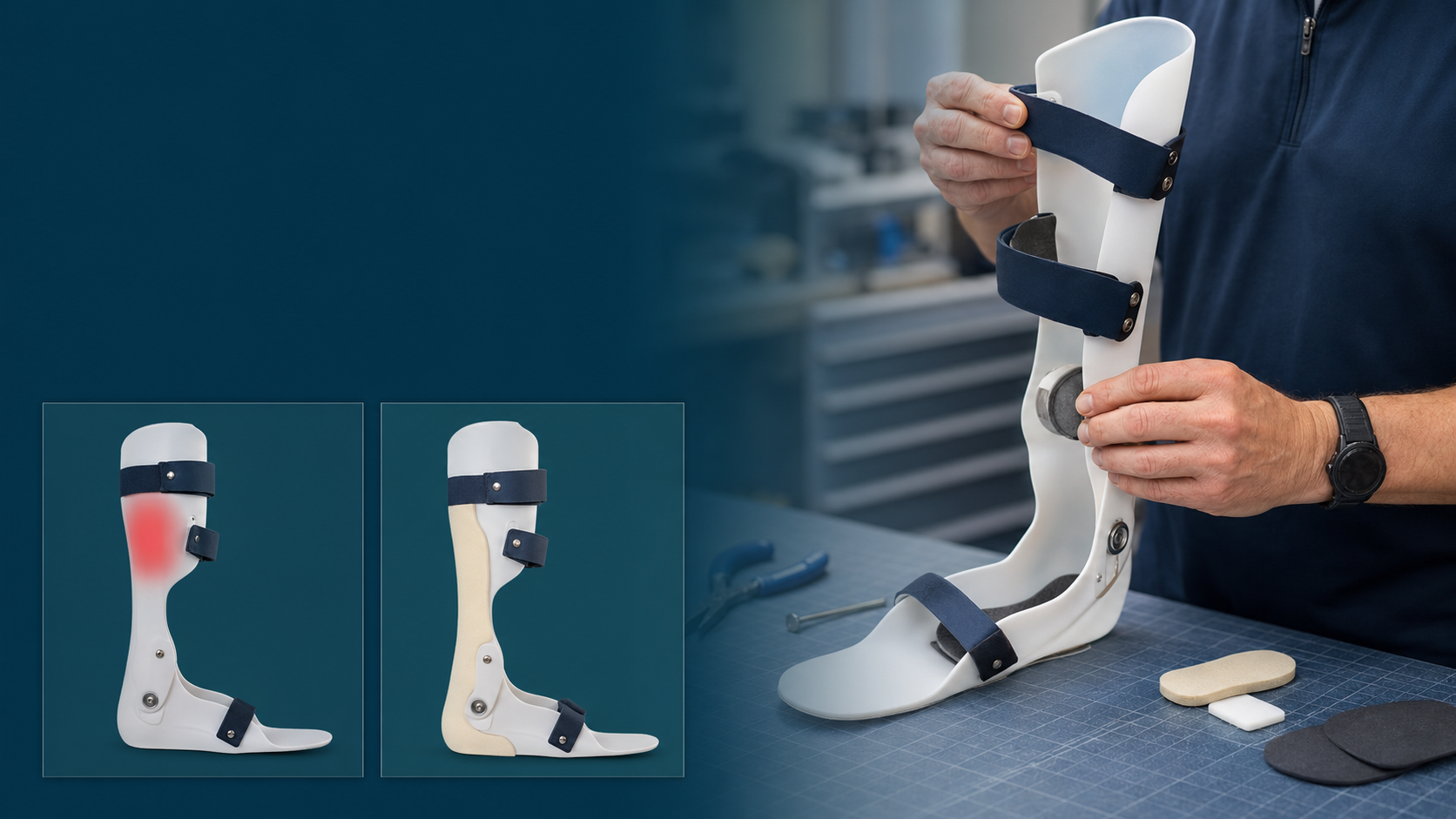
Clinical Orthotic Modifications: Solving Fit, Pressure and Alignment Problems
Delivery is not the end of fabrication. Once an orthosis is placed on the patient and evaluated during function, small problems may become visible: focal pressure, heel lift, strap migration, edge irritation or an unexpected knee effect. Skilled modification translates this feedback into a safer and more effective device.
Modify the cause, not only the symptom. Adding padding to every red area may hide an alignment or fit problem without correcting it.
Begin With Reassessment
Ask when the problem occurs, how long the device has been worn and whether the body, footwear or activity has changed. Inspect the skin, mark the exact area and observe donning, standing and movement. Compare the complaint with the original prescription.
Pressure Problems
Pressure may result from insufficient relief, poor total contact, volume change, a prominent edge, incorrect strap force or altered alignment. Options include localized heat relief, contour correction, edge reshaping, softer interface or redistributing load over a broader area. Extra space without control can create movement and friction, so relief must be precise.
Heel Lift and Pistoning
Check whether the heel is fully seated, whether the ankle angle matches available range and whether straps are positioned to direct the heel down and back. Footwear depth and closure also matter. Padding should not be used to compensate for a fundamentally oversized or incorrectly aligned device.
Strap and Edge Irritation
Straps should apply force in the intended direction without crossing vulnerable anatomy. They may require repositioning, length adjustment, wider material or a soft interface. Edges should be smooth and flared away from sensitive areas while preserving required trimline control.
Unexpected Knee Behaviour
An AFO modification can change tibial progression and the knee moment. If the patient develops knee hyperextension, buckling or excessive crouch, review ankle angle, stiffness, stops, resistance and shoe heel height. Do not solve a gait problem by trimming away structural control without reassessment.
A Safe Modification Sequence
- Identify the exact functional or skin problem.
- Check prescription, fit, alignment and footwear.
- Form a biomechanical explanation.
- Make one controlled change where possible.
- Reassess skin, comfort, standing and gait.
- Document the modification and outcome.
- Arrange follow-up if the effect may evolve.
Cracks, delamination, loose joints, failed locks, major volume change, wounds or unexplained pain may require repair, replacement or medical review rather than a simple fitting adjustment.
My Workshop Reflection
The best modification is often small, but it is never random. Good problem-solving connects patient feedback, anatomy, material behaviour and biomechanics. Each adjustment should preserve the original clinical goal while improving comfort and usability.
This blog shares professional education. Structural repairs and clinical modifications should be performed by qualified personnel using appropriate safety procedures.