Understanding Foot Pressure: How Insoles Improve Comfort, Alignment and Weight Distribution
Every step transfers body weight through the feet. That load is not distributed equally: the heel, metatarsal heads, great toe and lateral forefoot often experience different forces during the walking cycle. This is normal, but pain, deformity, reduced sensation, altered gait or unsuitable footwear may concentrate pressure in areas that cannot tolerate it well.
A successful insole does not simply make the shoe feel softer. It changes how load is accepted, distributed and transferred according to the patient’s condition and functional goal.
What Is Plantar Pressure?
Plantar pressure describes the force applied over a specific area under the foot. Pressure is influenced by body weight, contact area, walking speed, foot shape, joint movement, muscle control, footwear and the time a region remains loaded. A small area carrying a high force may experience greater pressure than a broad area carrying the same overall load.
Why Pressure Becomes a Clinical Problem
- A prominent metatarsal head or heel may receive concentrated load.
- Limited ankle movement can alter progression and increase forefoot demand.
- Rigid deformity may reduce the foot’s ability to adapt to the ground.
- Weakness or poor motor control may change timing and stability.
- Reduced sensation may prevent a person from noticing harmful pressure.
- Tight, unstable or worn footwear can create or magnify pressure.
Pressure Is More Than a Colour Map
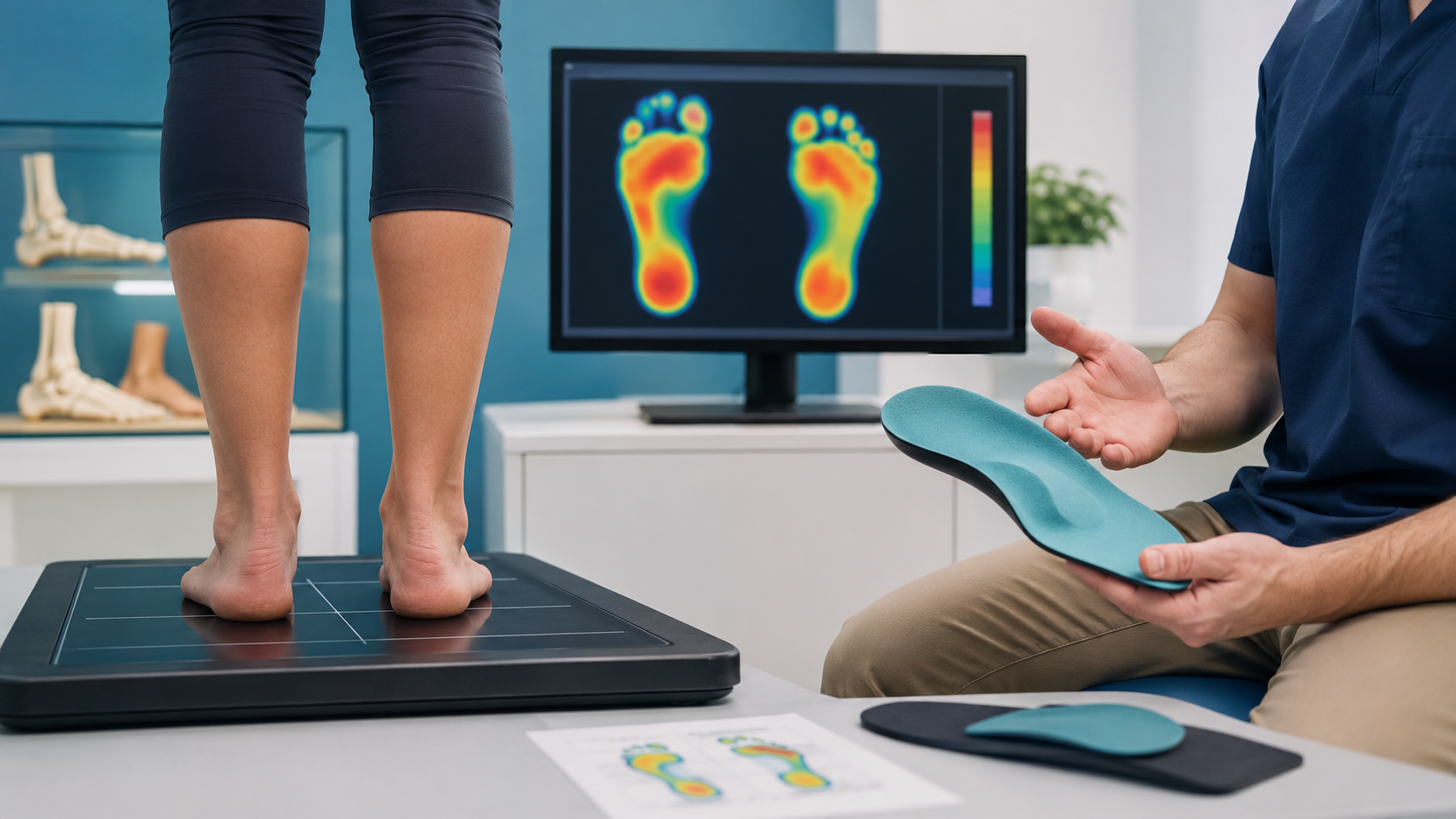
Pressure platforms and in-shoe systems can show where and when load occurs, often using colour maps. These tools can support assessment, but the highest-pressure colour is not automatically the diagnosis. Findings must be interpreted alongside pain location, skin condition, callus, joint range, alignment, gait, activity and footwear.
How Insoles May Change Load
| Insole strategy | Intended effect | Important consideration |
|---|---|---|
| Total contact | Increases the area sharing the load. | Contour must match the foot without creating focal pressure. |
| Cushioning | Reduces impact and improves comfort. | Material can compress with time and may reduce shoe space. |
| Local relief | Reduces direct load over a sensitive prominence. | Relief position and transition must be accurate. |
| Metatarsal support | May transfer load away from painful metatarsal heads. | Incorrect placement can increase discomfort. |
| Posting or wedging | Influences foot position and movement. | The required correction must be clinically assessed and tested. |
| Heel cup or stabilization | Supports rearfoot position and consistency. | Requires suitable footwear width, depth and heel control. |
Cushioning and Correction Are Not the Same
A soft accommodative insole aims primarily to protect and redistribute pressure. A more controlling design may guide alignment or motion. Many prescriptions combine both approaches in different regions. The most appropriate balance depends on tissue tolerance, flexibility, diagnosis, activity and footwear.
Comfort, Alignment and Function
Comfort is important, but it is not the only outcome. An insole may also improve contact, influence the path of pressure, reduce unwanted movement or provide a more stable base. At the same time, aggressive correction can create new pressure or reduce tolerance. Clinical success is therefore judged through skin response, symptoms, gait, activity and the patient’s ability to use the device consistently.
Diabetes and Sensory Loss
When sensation is reduced, a person may not feel excessive pressure, friction or a foreign object inside the shoe. Accommodative materials, total contact and appropriate footwear may help protect the foot, but they require careful fitting and regular review. Insoles do not replace daily skin inspection, medical foot care, vascular assessment or ulcer management.
An open wound, spreading redness, swelling, heat, discharge, blackened tissue, suspected infection or sudden unexplained pain requires prompt medical attention. Do not continue using an insole that appears to worsen skin injury.
Why Footwear Matters
The pressure pattern produced by an insole changes when it is moved to a different shoe. Width, depth, sole stiffness, heel height, rocker profile and fastening all influence function. For this reason, pressure and gait should be reviewed in the footwear in which the insole will actually be used.
Assessment and Follow-Up
- Identify the diagnosis, symptoms and functional goals.
- Inspect skin, callus, deformity, sensation and circulation.
- Assess range, strength, alignment and walking.
- Review the current shoes and wear pattern.
- Select the insole strategy and material according to the goal.
- Check standing, walking, comfort and skin response.
- Review after the patient has used the device in daily life.
Conclusion
Foot pressure reflects an interaction between anatomy, movement, tissue tolerance, activity and footwear. Insoles can improve comfort and redistribute load, but their effect depends on accurate assessment, appropriate design, correct shoe selection and follow-up. The goal is not to eliminate pressure—walking requires pressure—but to manage it safely and functionally.
Educational note: This information does not replace individual examination, medical diagnosis, diabetic-foot care or a professional orthotic prescription.