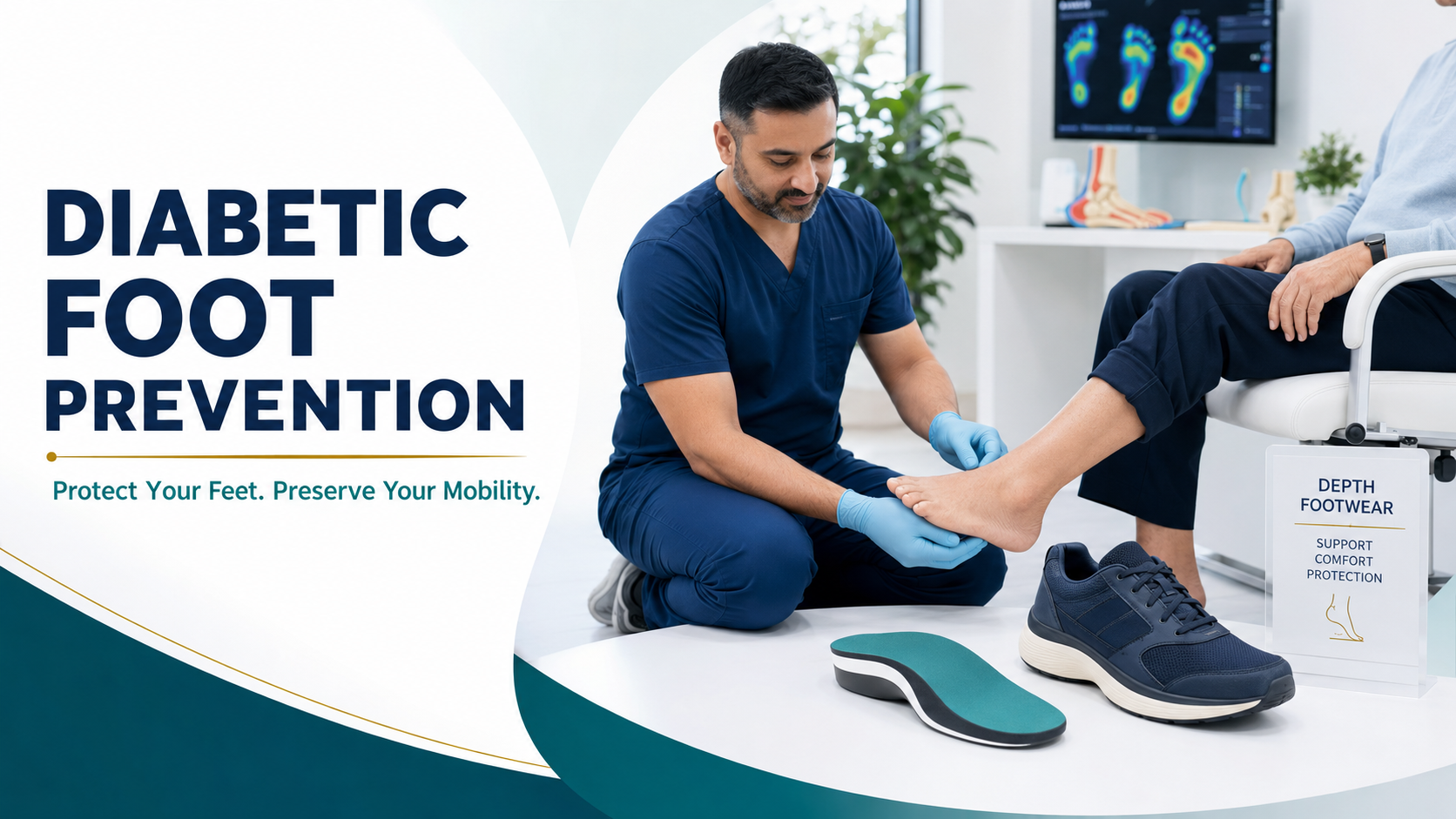
Diabetic Foot Prevention: Protect Your Feet, Preserve Your Mobility
Diabetes can affect sensation, circulation, skin health and the body’s ability to heal. A small blister or pressure area that might normally be noticed quickly can become serious when protective sensation is reduced. The encouraging message is that many complications can be prevented through daily care, regular screening, suitable footwear and early professional treatment.
Prevention is a shared process involving the person living with diabetes, family members when appropriate, physicians, diabetes educators, podiatrists, nurses, orthotists and footwear specialists.
Do not wait for pain. Neuropathy may reduce pain sensation, so daily visual inspection is one of the most important protective habits.
Why Diabetes Places the Feet at Risk
Peripheral neuropathy may reduce the ability to feel heat, pressure, rubbing or injury. Motor changes can contribute to deformity and concentrated pressure, while dry or fragile skin may crack. Peripheral arterial disease can reduce blood flow and delay healing. When these factors combine, callus, footwear friction or a minor injury can progress to ulceration or infection.
Know Your Personal Risk
Risk is not the same for everyone. A clinician should assess skin condition, foot shape, pulses, sensation, footwear and any history of ulceration or amputation. People with neuropathy, deformity, poor circulation, kidney disease or a previous ulcer generally require closer follow-up and more protective footwear planning.
Perform a Daily Foot Inspection
Check the tops, soles, heels, sides and spaces between the toes every day. Use a mirror or ask for help if needed.
- Look for cuts, blisters, cracks, redness, swelling and drainage.
- Notice callus, corns, changes in color or temperature, and new deformity.
- Check toenails and the skin between the toes.
- Inspect inside shoes for stones, rough seams, moisture or damaged lining before putting them on.
Wash, Dry and Moisturize Carefully
Wash the feet daily using warm—not hot—water and mild soap. Check water temperature safely, particularly if sensation is reduced. Dry thoroughly, especially between the toes. Moisturizer can help dry skin, but it should not usually be placed between the toes because persistent moisture can encourage skin problems.
Do not use chemical corn removers, blades or sharp instruments on callus. Nail and callus care should be performed according to professional advice, especially when sensation or circulation is impaired.
Never Walk Barefoot
Bare feet can be injured by sharp objects, heat or repeated pressure without the person noticing. Protective, properly fitting footwear should be worn indoors and outdoors. Thin slippers and socks alone may not provide enough protection for an at-risk foot.
Choose Footwear for Protection, Not Appearance Alone
Shoes should provide adequate length, width and depth, a secure fastening, a supportive sole and a smooth internal environment. Toes should not be crowded, and prominent areas should not rub against seams or edges. High heels, pointed toe boxes and poorly fitting slip-on footwear can increase pressure and instability.
New footwear should be introduced gradually, with skin checks after each short wearing period. A shoe that feels comfortable can still create harmful pressure when protective sensation is reduced.
The Role of Therapeutic Footwear and Insoles
People with deformity, pressure-related callus, neuropathy or previous ulceration may require medical-grade footwear, custom-moulded shoes, custom insoles or toe orthoses. These devices aim to accommodate foot shape, reduce friction, redistribute plantar pressure and improve stability.
An insole is effective only when it is correctly designed, fitted inside suitable footwear and worn consistently. It requires follow-up because materials compress, body weight and activity change, and the foot can develop new pressure areas. People with a healed plantar ulcer may need footwear with a demonstrated pressure-relieving effect as part of a specialist prevention plan.
Manage Diabetes and General Health
Foot protection works best alongside the overall diabetes plan. Attend medical reviews, take medicines as prescribed, discuss glucose targets with the treating clinician, avoid smoking and address blood pressure, cholesterol and circulation risks. Safe physical activity supports health, but the type and amount should match foot condition and professional advice.
- A new wound, blister, ulcer, drainage or bad odor
- Increasing redness, warmth, swelling or pain
- Black, blue, pale or rapidly changing skin color
- A hot, swollen or changing foot shape, even without pain
- Fever or feeling unwell with a foot problem
Do not treat an active ulcer by simply adding a soft insole or ordinary shoe. Ulcers require prompt clinical assessment and an appropriate offloading and wound-care plan.
Regular Professional Screening
Professional foot assessment should be part of diabetes care. The frequency depends on individual risk. Screening may include sensory testing, circulation checks, skin and nail review, footwear assessment and identification of deformity or pressure points. Early referral is important when a pre-ulcerative sign or footwear problem is found.
A Simple Daily Prevention Routine
- Morning: inspect both feet and the inside of footwear before dressing.
- During the day: wear suitable shoes and socks; notice any new swelling or change in walking.
- Evening: wash, dry and inspect the feet again; check the footwear for wear or foreign objects.
- Regularly: attend diabetes and foot-care appointments and have footwear or insoles reviewed.
Frequently Asked Questions
Can I walk barefoot at home?
People with an at-risk diabetic foot should avoid walking barefoot, in socks alone or in thin slippers because these provide limited protection from trauma and pressure.
Do all people with diabetes need custom shoes?
No. Footwear should match the person’s risk, shape and clinical findings. Custom or medical-grade options are more likely to be required when neuropathy, deformity, pressure areas or a previous ulcer is present.
Can an insole heal a diabetic foot ulcer?
An ordinary insole is not a substitute for ulcer treatment. An active ulcer needs urgent assessment and a clinically selected offloading strategy, wound care and medical management.
What socks are suitable?
Socks should fit without tight bands or bulky seams and should help manage moisture. Individual recommendations may differ when swelling, vascular disease or another condition is present.
Key Takeaways
- Inspect the feet and footwear every day—even when nothing hurts.
- Wear protective, properly fitting footwear indoors and outdoors.
- Use therapeutic footwear and insoles only after appropriate assessment and fitting.
- Never self-treat wounds, callus or corns with sharp tools or chemicals.
- Report warning signs early; rapid treatment can protect both health and mobility.
This article provides general education and does not replace individual diabetes, vascular, wound-care, podiatry or orthotic assessment.