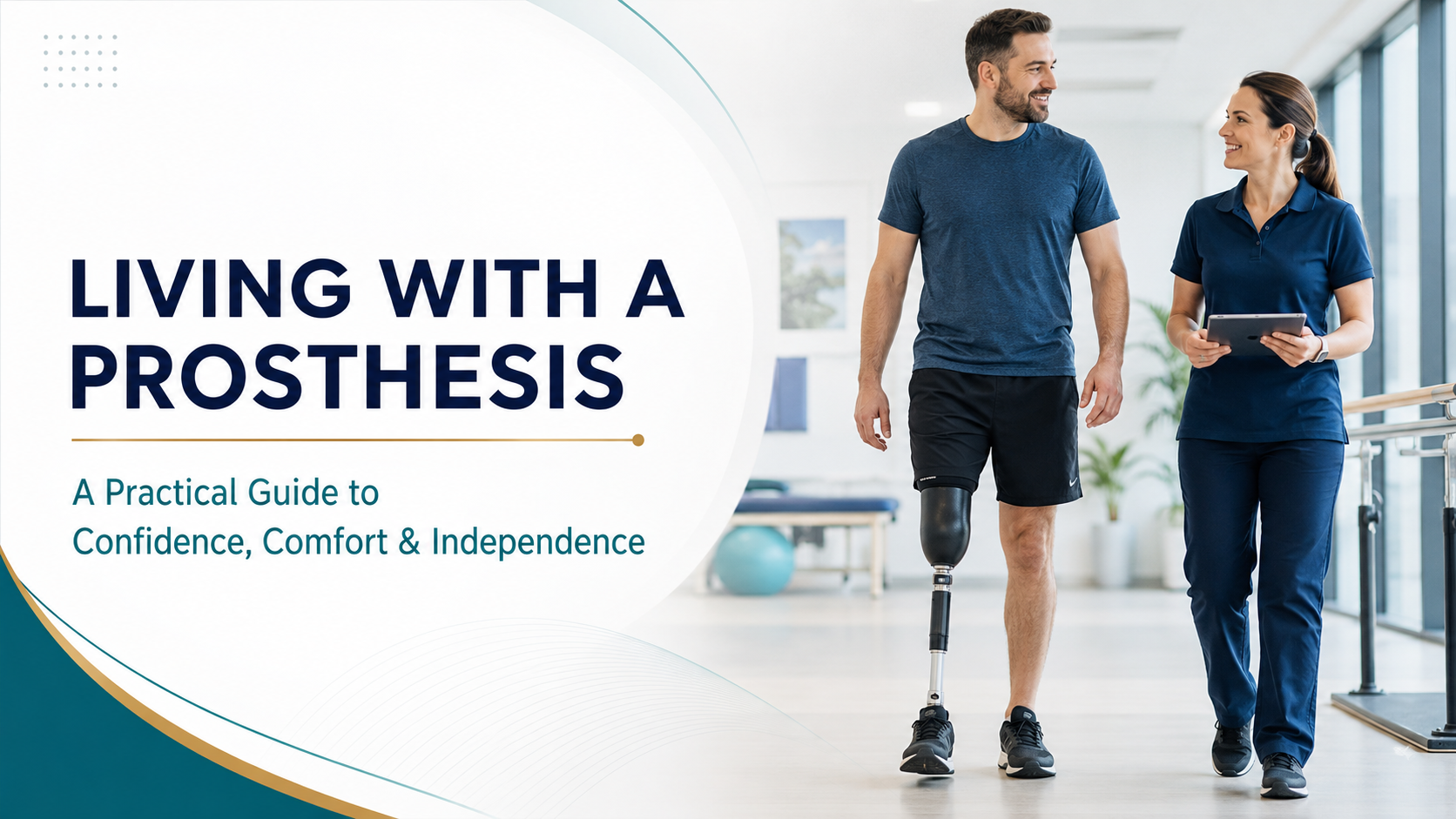
Living with a Prosthesis: A Practical Guide to Confidence, Comfort and Independence
Receiving a prosthesis is an important milestone, but it is not the end of rehabilitation. It marks the beginning of a learning process in which the body, the device and everyday goals gradually work together. Progress may include learning to apply and remove the prosthesis, managing limb-volume changes, improving balance, building strength and returning to family, work and community life.
A prosthesis should support meaningful activities rather than define the person using it. The most successful plan is therefore individualized around health, amputation level, home environment, occupation, personal priorities and expected activity.
Comfort, control and confidence develop through correct fit, gradual training and regular communication with the rehabilitation team.
Understanding the Adjustment Period
Learning to use a prosthesis takes time. Early sessions often focus on safety, transfers, standing balance and controlled movement. A lower-limb user may progress toward walking on different surfaces, stairs and community mobility. An upper-limb user may practise positioning, grasp, release and task-specific activities.
Some people use a cane, crutches, a walker or a wheelchair alongside their prosthesis. These are valid mobility tools. Independence is measured by safe participation and personal goals—not by whether someone uses the prosthesis for every activity.
Follow the Recommended Wearing Schedule
New users are usually advised to increase wearing time gradually. Short, planned periods allow the skin and soft tissues to adapt to pressure while the prosthetist monitors the socket fit. Wearing the device for too long too soon may cause pain or skin injury.
- Follow the schedule provided by your prosthetist and therapist.
- Remove the prosthesis at each scheduled check and inspect the skin.
- Record discomfort, redness and activities that cause difficulty.
- Do not make permanent socket or component adjustments yourself.
Daily Skin and Residual-Limb Checks
Inspect the entire residual limb before and after prosthesis use. Use a mirror for areas that are difficult to see. Look for blisters, cuts, swelling, unusual warmth, drainage, bruising or persistent redness. Clean and dry the skin as instructed, and keep liners and prosthetic socks clean.
- An open wound, blister or drainage
- Redness that does not settle after the period advised by your clinician
- Increasing pain, swelling, warmth or unusual odor
- Sudden loss of fit, instability or a damaged component
- Fever or other signs of infection
Socket Fit and Limb-Volume Changes
The socket is the connection between the body and the prosthesis. Even small changes in residual-limb volume can change pressure distribution and control. Volume may vary during the day and can also change with healing, activity, body weight, medication or health conditions.
Depending on the prosthetic design, the clinician may recommend prosthetic socks, pads or another volume-management method. Too many or too few sock layers can create pressure and reduce suspension, so changes should follow professional guidance. Repeated pain or frequent need for major adjustments may indicate that the socket requires clinical review.
Build Strength, Balance and Endurance
A prosthesis works best when combined with appropriate rehabilitation. Physiotherapy may address joint range, muscle strength, balance, walking efficiency, cardiovascular fitness and fall recovery. Occupational therapy can support self-care, work, home activities and upper-limb function.
- Complete the prescribed home-exercise programme consistently.
- Maintain flexibility and avoid prolonged positions that promote contracture.
- Practise new environments under professional guidance before attempting them alone.
- Increase distance and activity gradually, allowing time for recovery.
Safe Walking and Fall Prevention
For lower-limb users, confidence grows through structured gait training. Correct step length, weight transfer, posture and foot placement can reduce compensatory movements and unnecessary energy use. At home, remove loose rugs, improve lighting, keep pathways clear and use handrails where appropriate.
If the prosthesis suddenly feels unstable, makes an unfamiliar sound or does not function normally, stop and inspect it. Do not continue walking on a component that may be damaged.
Caring for the Prosthesis
Follow the manufacturer’s and prosthetist’s instructions for cleaning the socket, liner and other parts. Water exposure, heat, chemicals and dust can affect some components. Avoid leaving the prosthesis in direct sunlight or a hot vehicle. Never apply oils, powders or household products inside the socket unless the clinical team specifically recommends them.
Routine review allows the prosthetist to assess alignment, suspension, wear, component safety and whether the device continues to match the user’s needs.
Phantom Sensations and Pain
Phantom sensations are feelings perceived in the missing part of the limb and are common after amputation. They are not always painful. Phantom limb pain, residual-limb pain and socket-related pain are different problems and should be assessed properly. Management may involve medical review, medication, physical or psychological approaches, desensitization and other strategies selected for the individual.
Emotional Wellbeing and Confidence
Adjustment can include frustration, grief, anxiety or changes in body image. These responses are understandable. Support from family, peers, rehabilitation professionals and mental-health practitioners can be valuable. Setting small functional goals—then recognizing each achievement—helps rebuild confidence.
Returning to Work, Driving and Recreation
Work and recreation goals should be discussed early so the prosthetic prescription and training can support them. Some activities require specialized components or adaptations. Driving may require formal assessment, vehicle modifications and compliance with local licensing rules. High-impact sport, heavy lifting and water activities should only begin after appropriate clinical advice.
Frequently Asked Questions
Should a prosthesis hurt?
A new socket may create unfamiliar pressure, but sharp, burning or increasing pain should not be ignored. Remove the device, check the skin and contact the prosthetist.
Can I sleep while wearing my prosthesis?
Generally, the prosthesis is removed for sleep unless a clinician has given a specific reason and instructions to do otherwise.
How often should I see my prosthetist?
Follow the review schedule provided by the clinic and request an earlier appointment when comfort, skin condition, body weight, function or component performance changes.
Will I need a replacement socket?
Possibly. Residual-limb shape and volume can change, especially during the first stages of rehabilitation. A new socket may be required when safe fit can no longer be achieved through appropriate adjustments.
Key Takeaways
- Increase prosthesis use gradually and follow the clinical wearing schedule.
- Inspect the skin and residual limb every day.
- Report persistent pain, wounds, instability or fit changes early.
- Rehabilitation, device care and regular follow-up are essential.
- A prosthesis is one tool for achieving safe, meaningful independence.
This article provides general education and does not replace an individual assessment by your prosthetist, physician or rehabilitation team.