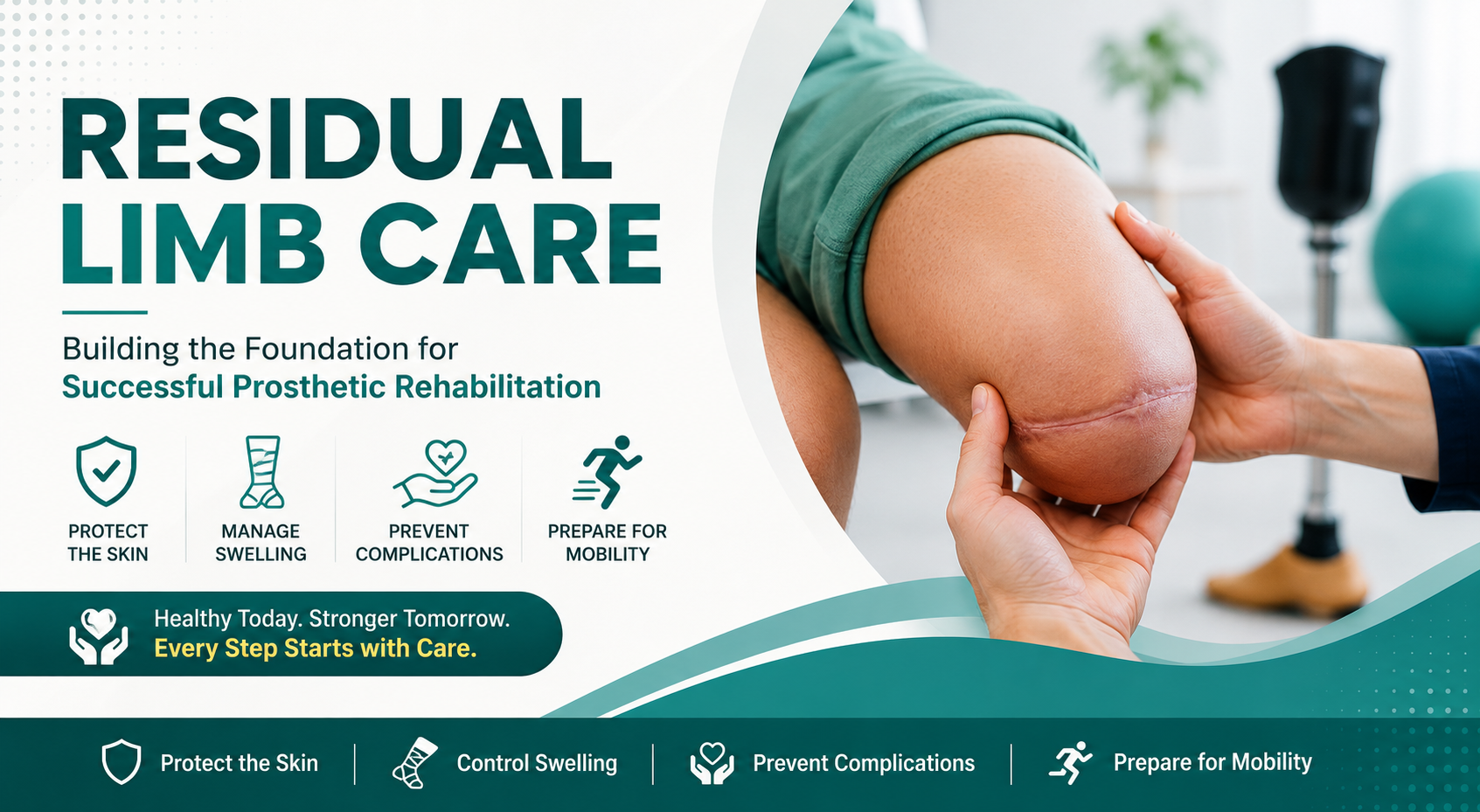
Residual Limb Care: Building the Foundation for Successful Prosthetic Rehabilitation
Successful prosthetic rehabilitation begins long before the first prosthetic limb is fitted. The health of the residual limb plays a vital role in determining comfort, mobility, socket fit, and long-term functional outcomes. Proper residual limb care reduces complications, improves healing, and prepares individuals for confident prosthetic use.
A well-cared-for residual limb is the foundation of every successful prosthetic fitting.
What is a Residual Limb?
A residual limb is the portion of the arm or leg that remains after an amputation. Although many people still use the term "stump," healthcare professionals prefer "residual limb" because it reflects a more respectful, patient-centered approach.
Every residual limb is unique. Its shape, skin condition, muscle strength, scar formation, circulation, and sensitivity influence prosthetic prescription and rehabilitation.
Goals of Residual Limb Care
- Promote wound healing
- Prevent infection
- Reduce swelling
- Shape the limb for prosthetic fitting
- Maintain healthy skin
- Prevent contractures
- Improve comfort inside the prosthetic socket
- Support long-term mobility
Daily Skin Inspection
The residual limb should be inspected every day using a mirror if necessary. Patients should check for redness, blisters, cuts, swelling, drainage, unusual odor, or skin breakdown.
Early recognition of skin problems prevents serious complications and reduces interruption of prosthetic use.
Skin Hygiene
Daily washing with mild soap and warm water helps remove sweat, bacteria, and dead skin cells. The limb should be dried thoroughly before applying liners or prosthetic socks.
Moisturizers should be applied only after removing the prosthesis at night unless otherwise advised by the prosthetist.
Residual Limb Shaping
Compression bandaging or shrinker socks help reduce swelling and create a cylindrical shape suitable for prosthetic socket fitting.
Proper wrapping techniques should always be demonstrated by rehabilitation professionals.
Desensitization
Many individuals experience increased sensitivity following amputation. Common techniques include:
- Light massage
- Gentle tapping
- Soft towel rubbing
- Texture exposure
- Scar massage after healing
Exercises
Exercise prevents muscle weakness and joint stiffness. Recommended activities include:
- Range-of-motion exercises
- Strengthening exercises
- Balance training
- Core stability exercises
- Stretching
- Persistent redness lasting more than 20 minutes
- Open wounds
- Fever
- Foul-smelling drainage
- Increasing swelling
- Severe pain
Preparing for Prosthetic Fitting
Before fitting a prosthesis, the residual limb should demonstrate stable volume, healthy skin, adequate strength, full joint mobility, and complete wound healing. Collaboration between surgeons, prosthetists, physiotherapists, occupational therapists, and patients ensures optimal outcomes.
Long-Term Care
Residual limb care continues throughout life. As body weight, activity level, and limb volume change, regular reviews with the prosthetist help maintain comfort and prosthetic function.
Key Takeaways
- Healthy skin leads to comfortable prosthetic fitting.
- Daily inspection prevents serious complications.
- Compression helps shape the limb.
- Exercise improves prosthetic outcomes.
- Regular follow-up with your prosthetist is essential.
Frequently Asked Questions
How often should I wash my residual limb?
Every day unless advised differently by your healthcare provider.
Is redness normal?
Mild redness that disappears within 15–20 minutes is common. Persistent redness should be assessed.
Can I wear my prosthesis if I have an open wound?
No. Wearing a prosthesis over an open wound may worsen the injury and increase infection risk.