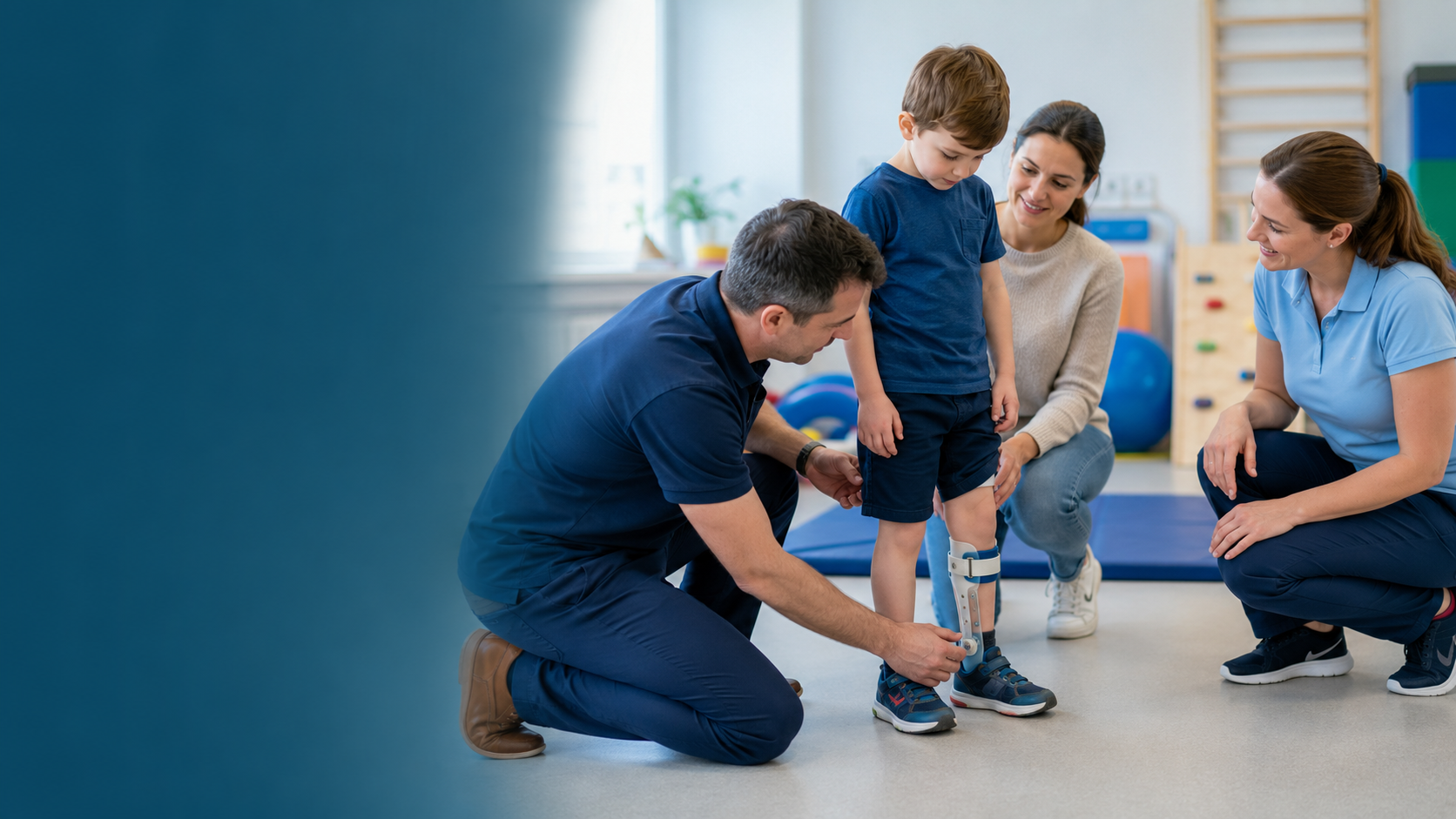
Pediatric Orthotics: Supporting Growth, Alignment and Mobility
Children are not simply smaller adults. Their bodies are growing, movement skills are developing and participation goals change rapidly. Pediatric orthoses must therefore support current function without unnecessarily limiting exploration, strength or independence.
The diagnosis does not select the orthosis. Prescription begins with the child’s movement pattern, joint range, muscle control, skin, goals, environment and stage of development.
Why Children May Need Orthoses
Orthoses may be considered for cerebral palsy, spina bifida, muscular dystrophy, peripheral nerve injury, developmental conditions, congenital limb differences, hypotonia, acquired brain injury and selected musculoskeletal deformities. Possible goals include improving stability, maintaining range, preventing deformity, protecting an insensitive foot, improving toe clearance or making standing and walking more efficient.
A Complete Pediatric Assessment
- Medical and developmental history
- Muscle strength, tone and selective motor control
- Passive and active range at the hip, knee, ankle and foot
- Flexible versus fixed alignment
- Standing balance and gait in different environments
- Skin, sensation, circulation and pressure risk
- Footwear, school routines, play and family priorities
- Use of walkers, crutches, standing frames or wheelchairs
- Growth, recent surgery and planned medical treatment
Common Orthotic Levels
Foot orthoses
Insoles may provide cushioning, pressure redistribution or selected support when control above the ankle is not required.
Supramalleolar orthoses
SMOs extend above the malleoli and may help manage selected flexible foot and ankle instability while allowing more sagittal ankle motion than many AFOs.
Ankle-foot orthoses
Solid, hinged, posterior-leaf-spring, dynamic and ground-reaction AFOs provide different resistance and control. The chosen design should match the gait problem: foot drop, excessive plantarflexion, crouch, knee hyperextension, mediolateral instability or protection.
KAFOs and higher-level devices
When knee control is inadequate, a KAFO may be considered. Reciprocating gait orthoses and standing systems have specialized roles for selected children and require multidisciplinary planning.
Alignment Influences the Knee and Hip
An AFO is not only an ankle brace. Its ankle angle, stiffness, trimlines and footwear influence tibial progression and the ground-reaction force at the knee. A device that improves toe clearance but causes excessive knee flexion or hyperextension has not achieved a balanced outcome. Observation and, when available, instrumented gait analysis help confirm the effect.
Growth and Follow-Up
Children can outgrow an orthosis before it looks damaged. Warning signs include toes reaching the edge, a shorter calf section, strap marks, heel lift, increased redness, pain, altered gait or difficulty applying the device. Follow-up frequency depends on age, diagnosis and growth rate.
Footwear Is Part of Treatment
The shoe must accommodate the orthosis without compressing the toes or distorting the plastic. Adequate depth, removable insock, secure fastening and a stable sole are commonly required. Heel height and sole geometry can change the AFO’s effect.
Family and Child Education
- Apply the orthosis correctly with the heel fully seated.
- Use the recommended sock and footwear.
- Follow the prescribed wearing schedule.
- Inspect the skin after removal.
- Keep straps, joints and padding clean.
- Do not heat, bend or cut the orthosis at home.
- Report changes in comfort, walking or function promptly.
Skin breakdown, persistent redness, swelling, pain, numbness, sudden functional decline, repeated falls, rapid growth, broken components or a meaningful change after surgery or medication.
Function and Participation Matter
An orthosis should help the child participate in family life, school, play and community activities. Sometimes the best plan includes different devices for different goals—for example, a walking AFO, night positioning device and wheelchair for longer distances. Success is not measured only by a straighter foot; it is measured by safety, comfort, energy, independence and meaningful participation.
This article is educational and does not replace individual pediatric orthopedic, neurological or orthotic assessment.
References: AFO effects on gait in children with spastic cerebral palsy; Systematic review of AFO types in children with cerebral palsy.