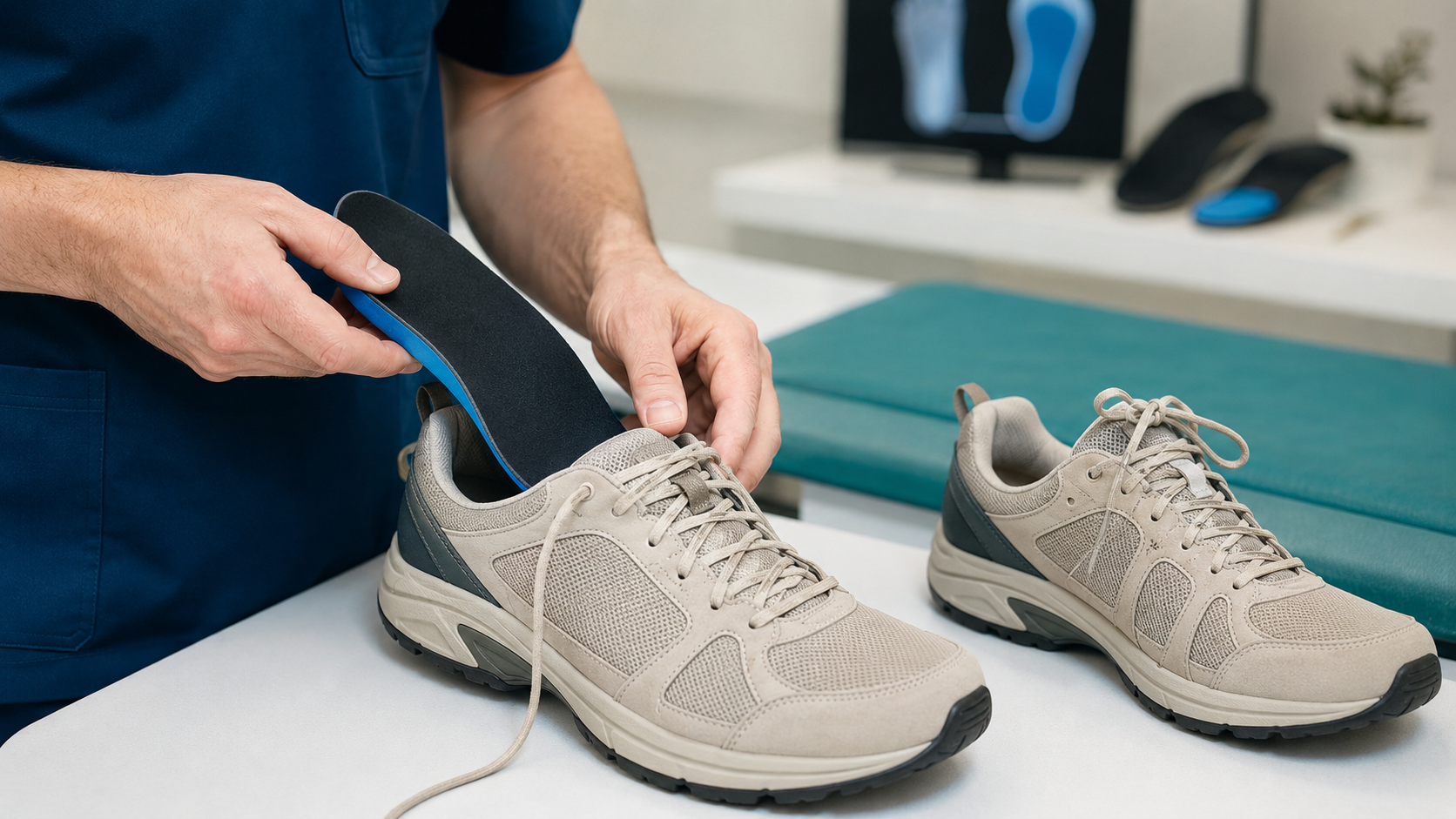
Proper Shoe Selection: Why Insole Effectiveness Depends on Appropriate Footwear
An orthopedic insole is designed to work between the foot and the ground, but it does not work independently. The shoe surrounds the insole, controls the available space and influences how the foot is held during standing and walking. Even a carefully selected or custom-made insole may fail to provide its intended support, pressure distribution and comfort when placed inside an unsuitable shoe.
The insole and shoe should be assessed, fitted and reviewed as one functional system—not as two separate products.
How the Shoe Influences the Insole
A shoe can support the insole’s function or work against it. A narrow upper may squeeze the foot against the insole and create new pressure. A shallow shoe may lift the heel or prevent secure closure. A very flexible or unstable shoe may allow movement that the insole was intended to control. A worn sole can also tilt the entire system and reduce the benefit of a correctly shaped device.
Essential Features of an Insole-Compatible Shoe
| Shoe feature | Why it matters | What to check |
|---|---|---|
| Correct length | Protects the toes and allows natural forward movement. | Adequate toe clearance without excessive sliding. |
| Adequate width | Prevents compression of the toes and forefoot. | The foot and insole sit flat without bulging over the sole. |
| Sufficient depth | Provides space for the foot plus the added insole thickness. | No heel lifting, tight closure or pressure over the toes. |
| Removable liner | Creates room without stacking multiple insoles. | The prescribed insole lies flat on the shoe base. |
| Secure fastening | Controls unwanted sliding and holds the heel back. | Laces, straps or another adjustable closure secure the foot comfortably. |
| Stable heel counter | Supports rearfoot position and improves consistency. | The rear of the shoe is supportive and not collapsed. |
| Stable sole | Provides a reliable platform for load transfer. | The sole is not excessively twisted, unevenly worn or damaged. |
Toe Box, Width and Depth Are Different
A shoe may be long enough but still too narrow or shallow. The toe box should match the shape and volume of the forefoot. Toes need room to lie naturally without overlapping or rubbing the upper. People with bunions, claw toes, swelling, diabetes or prominent joints may require extra width or depth rather than simply a larger shoe size.
Why Secure Fastening Matters
Laces and adjustable straps help hold the heel against the back of the shoe. Without secure fastening, the foot may slide forward, the heel may lift and the arch may no longer align with the intended contour of the insole. A loose slip-on shoe can therefore reduce control even when it feels easy to wear.
Remove the Original Liner When Appropriate
Many supportive shoes include a removable factory liner. Where clinically appropriate, this is removed before inserting the prescribed insole. Placing one insole on top of another can reduce depth, raise the heel, tighten the upper and alter the intended geometry. The new insole should lie flat without rocking, curling or being forced into the shoe.
Common Footwear Problems
- Narrow shoes that compress the forefoot or distort the insole.
- Shallow shoes that cause heel lifting or dorsal toe pressure.
- Slip-on footwear that cannot hold the foot securely.
- High heels that transfer excessive pressure toward the forefoot.
- Very soft or unstable shoes that do not provide a reliable base.
- Worn soles, collapsed heel counters or uneven heel wear.
- Stacking the prescribed insole over the shoe’s original liner.
Special Considerations
Diabetes and Reduced Sensation
People with diabetes, neuropathy, previous ulceration or significant deformity need careful footwear assessment. Seam location, depth, pressure, closure and internal condition are particularly important. New shoes and insoles require gradual introduction, regular skin checks and scheduled professional review.
Children
Children’s feet and footwear size change with growth. An insole that fitted correctly several months earlier may become too short or may no longer align with the heel and arch. The shoe should also be checked for growth space without being so large that the foot slides.
Work and Safety Footwear
Safety shoes may be governed by occupational standards. Changing the internal system can affect fit or certification, so the footwear requirements, approved components and workplace policy should be reviewed before modification.
A Practical Fitting Check
- Remove the original liner when this is part of the fitting plan.
- Confirm that the new insole lies completely flat.
- Check heel position, arch alignment, width and toe space.
- Fasten the shoe securely and assess comfort.
- Observe standing and walking in the actual shoe.
- Inspect the skin after the trial, especially if sensation is reduced.
- Review both the insole and shoe when symptoms or function change.
Persistent redness, pain, numbness, skin injury, new swelling, instability or a sudden change in walking should not be managed by changing shoes or adding padding without assessment.
Conclusion
Appropriate footwear is not simply a container for an insole—it is part of the treatment. Correct length, width, depth, fastening, heel support and sole stability allow the insole to remain in the intended position and deliver its prescribed mechanical effect. For the best outcome, take the shoes you use most often to the assessment and follow-up appointment.
Educational note: This article provides general information and does not replace individual footwear, foot, gait or medical assessment.