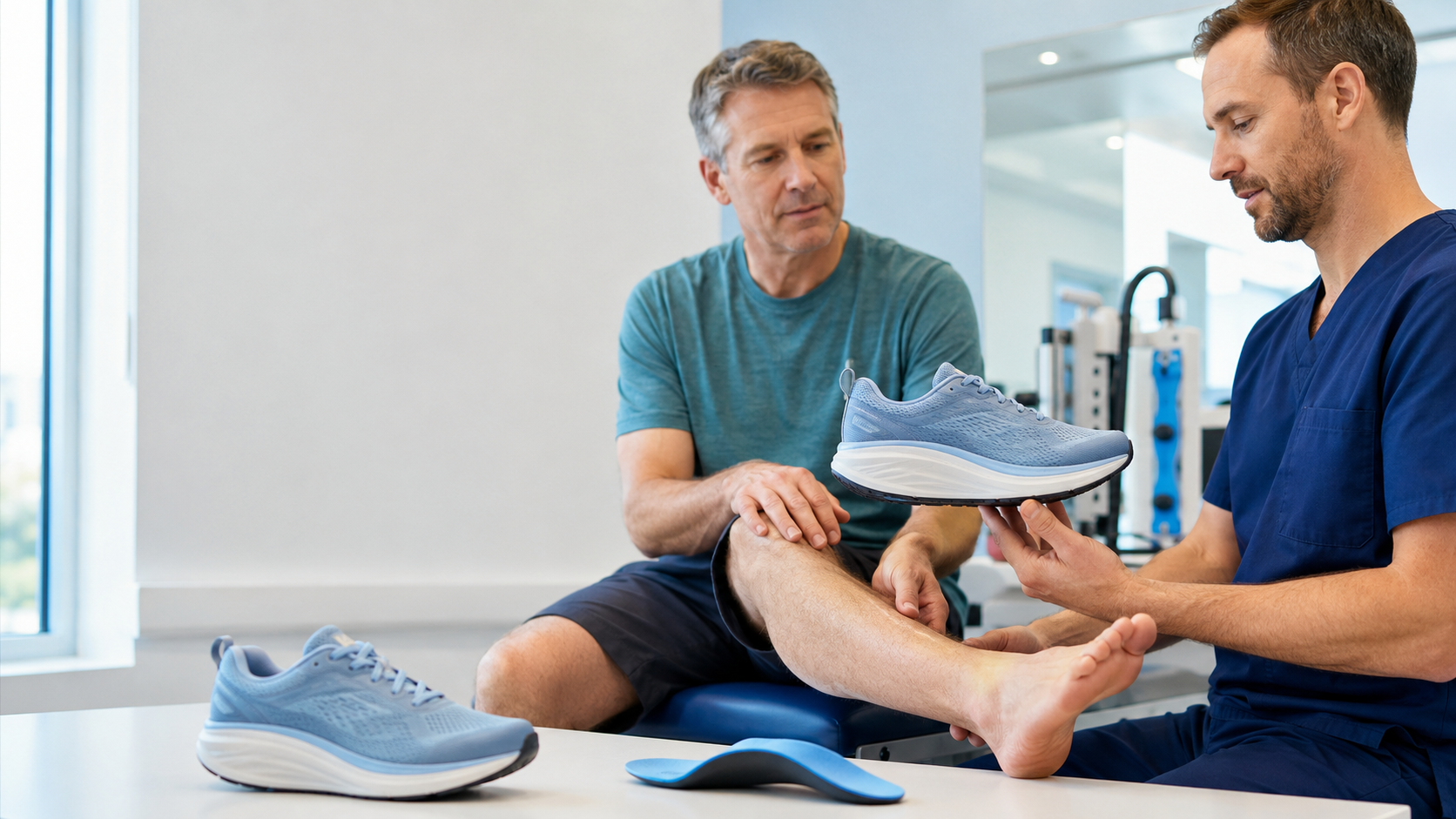
Rocker-Sole Footwear for Plantar Fasciitis
Plantar fasciitis—often described more accurately as plantar fasciopathy—is a common cause of pain underneath the heel. Symptoms are typically worse during the first steps after waking or after prolonged sitting and may increase with extended standing or walking.
Footwear plays an important role in managing plantar heel pain. In selected patients, a properly designed rocker sole may make walking more comfortable by changing how the foot progresses from heel contact to toe-off. However, rocker footwear is not a universal treatment and must be selected according to the patient’s symptoms, foot mechanics, balance and activity requirements.
A curved sole does not automatically unload the plantar fascia. The rocker apex, radius, stiffness, cushioning and overall shoe stability determine its biomechanical effect.
What Is a Rocker Sole?
A rocker sole is a curved shoe sole designed to help the body roll forward during walking. Instead of requiring the foot and ankle to move through the complete normal rollover pattern, the curved sole assists progression over the supporting foot.
Important design elements include:
- Location of the rocker apex
- Angle and radius of the curve
- Sole stiffness and thickness
- Heel cushioning
- Width and stability of the base
- Heel-to-toe height difference
- Compatibility with the patient’s foot orthosis
How Might Rocker Soles Help?
Facilitating forward progression
The curved sole may make the transition from mid-stance to toe-off smoother. This can reduce the amount of movement required through painful or restricted foot and ankle structures.
Reducing forefoot bending
A stiff rocker sole can limit excessive extension through the metatarsophalangeal joints during push-off. Because toe extension activates the plantar fascia through the windlass mechanism, reducing excessive forefoot bending may theoretically decrease repeated tensile loading.
Accommodating limited ankle dorsiflexion
Patients with calf tightness or restricted ankle dorsiflexion may compensate through the foot during walking. A suitable rocker profile can assist rollover and may reduce the demand for ankle advancement in selected cases.
Working with a foot orthosis
A contoured foot orthosis can provide arch support, pressure redistribution and heel cushioning, while the rocker sole assists forward progression. Research comparing different combinations found better pain results when rocker footwear was combined with a foot orthosis than when rocker footwear was used alone.
Rocker Soles Do Not Automatically Unload the Plantar Fascia
The clinical effect depends heavily on the rocker design. A biomechanical study found that a rocker shoe with an apex at approximately 56% of shoe length did not significantly reduce peak plantar-aponeurosis strain in people with plantar fasciitis. This demonstrates that the presence of a curved sole alone does not guarantee therapeutic unloading.
Some rocker designs redistribute pressure away from the forefoot but may increase loading in another region, including the heel. This is particularly important for someone whose main symptom is heel pain. The prescription should therefore not be based simply on the label “rocker shoe.”
Clinical Assessment Before Prescription
Before recommending rocker footwear, the clinician should assess:
- Exact location, intensity and behaviour of the pain
- Medial calcaneal tenderness and first-step pain
- Ankle dorsiflexion and calf tightness
- Foot posture and arch behaviour
- First metatarsophalangeal-joint mobility
- Gait pattern, walking speed and occupational demands
- Balance and fall risk
- Existing footwear and orthoses
- Neuropathy, diabetes or reduced protective sensation
Other causes of heel pain—including heel-fat-pad disorders, nerve entrapment, calcaneal stress injury, inflammatory disease and referred pain—should be considered when the presentation is atypical.
Features of Suitable Rocker Footwear
- A stable and sufficiently wide base
- Secure lace, strap or other fastening
- A firm heel counter
- Adequate heel cushioning
- Smooth and predictable rollover
- Enough internal depth for an orthosis
- A rocker apex selected according to the required unloading
- Appropriate sole stiffness, shoe length and width
The patient should walk in the shoes during fitting. Comfort while sitting does not confirm that the footwear will be safe or effective during real activity.
When Caution Is Required
Rocker soles may be unsuitable—or may require carefully supervised introduction—for people with significant balance impairment, recurrent falls, dizziness, severe weakness, uncontrolled knee instability, marked sensory loss or difficulty adapting to a curved sole.
Highly curved or unstable designs can alter balance and lower-limb mechanics. A mild, stable rocker may be better tolerated than an aggressive rocker profile.
Rocker Shoes Should Be Part of a Wider Treatment Plan
Current clinical guidance supports a combined approach to plantar heel pain rather than relying on footwear alone. Depending on assessment, management may include:
- Plantar-fascia-specific stretching
- Gastrocnemius and soleus stretching
- Progressive foot and lower-limb strengthening
- Manual therapy and taping
- Foot orthoses
- Supportive and appropriately cushioned footwear
- Temporary activity modification
- Gradual return to walking, work or sport
- Night splinting in selected patients
Fitting and Follow-Up
The patient should initially wear the rocker footwear for short periods and gradually increase use if symptoms and balance remain acceptable. Follow-up should examine first-step pain, standing and walking tolerance, new pressure areas, stability, shoe wear and interaction between the shoe and orthosis.
If pain increases, balance deteriorates or a new pressure area develops, the footwear should be reassessed rather than continued automatically.
Conclusion
Rocker-sole footwear may help selected patients with plantar fasciitis by assisting rollover, limiting forefoot bending and complementing a correctly prescribed foot orthosis. However, not every rocker design reduces plantar-fascia strain, and some designs may transfer additional load toward the heel.
The best results come from matching the rocker geometry, cushioning, stability and orthotic support to the patient’s examination findings. Rocker footwear should therefore be considered one component of a complete treatment plan—not a standalone cure.
Professional References
- Heel Pain—Plantar Fasciitis: Revision 2023 Clinical Practice Guideline
- Biomechanical effects of rocker shoes on plantar-aponeurosis strain
- Combined rocker-sole shoes and foot orthoses for plantar fasciitis
Clinical note: This article is for professional and patient education and does not replace individualized assessment by a qualified healthcare professional.