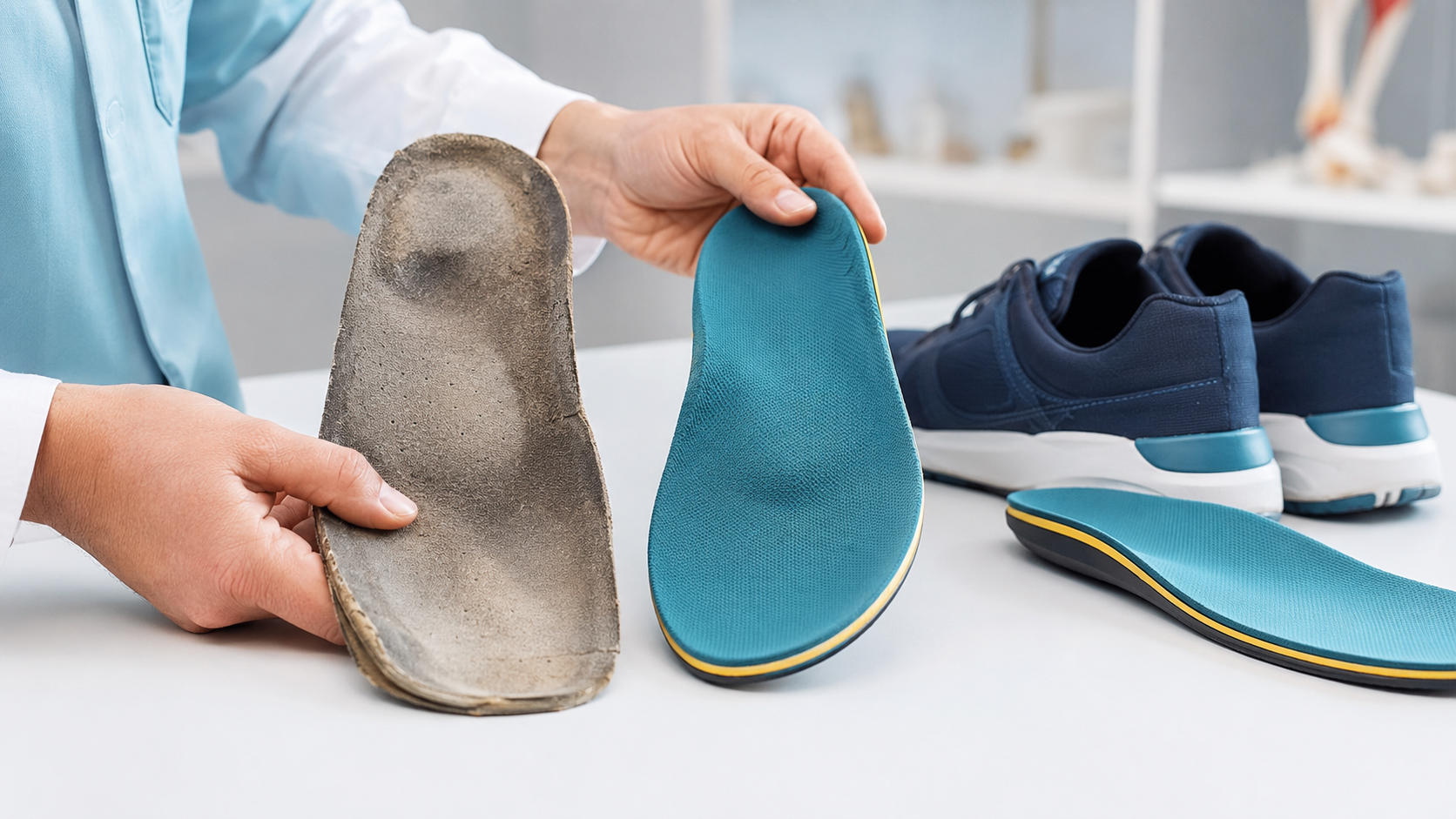
When Should Insoles Be Replaced? Signs of Wear, Poor Fit and Reduced Support
Orthopedic insoles are exposed to repeated body weight, heat, moisture, friction and thousands of steps. Their materials and shape can change gradually, sometimes before the user realizes that support or cushioning has reduced. There is no single replacement date that applies to everyone; the correct timing depends on the prescription, materials, activity, footwear, body weight, growth and foot condition.
An insole should be reviewed according to its condition and clinical performance—not replaced only because of age, and not kept only because it still looks usable.
Visible Signs of Wear
- A top cover that is torn, cracked, peeling or worn through.
- Permanent compression under the heel or forefoot.
- Loss of the original contour or arch shape.
- Edges that curl, separate or no longer lie flat.
- Cracks in a rigid or semi-rigid shell.
- Delamination between material layers.
- Strong odour, moisture damage or a surface that cannot be cleaned safely.
Functional Signs That Need Review
Not all problems are visible. A change in symptoms or walking may indicate that the insole, shoe, foot or wider clinical condition has changed. Review is appropriate when:
- Previous pain returns or a new pain develops.
- The foot slides, the heel lifts or the insole moves inside the shoe.
- Support feels noticeably lower or cushioning feels “bottomed out.”
- New redness, callus, blistering or pressure marks appear.
- The shoes begin wearing unevenly or walking feels less stable.
- The insole no longer fits the footwear used for daily activities.
- There has been surgery, injury, major weight change or progression of a condition.
Material Type Influences Longevity
| Material or component | Typical change with use | What review may involve |
|---|---|---|
| Soft foam cushioning | Compression and reduced rebound. | Replace the cover or cushioning layer if the base remains appropriate. |
| EVA or multi-density foam | Local packing-down, abrasion or shape change. | Reassess support, pressure relief and material density. |
| Cork or composite base | Cracking, distortion or breakdown at high-load areas. | Repair may be possible only if structural integrity remains safe. |
| Rigid or semi-rigid shell | Fatigue, cracking or loss of fit as the foot changes. | A new shell may be required; do not continue using a cracked device. |
| Top cover | Surface wear, moisture retention or delamination. | A professional re-cover may extend use when the underlying prescription remains correct. |
Can an Insole Be Refurbished?
Sometimes the main structure remains appropriate and only a top cover, heel cushion or small component requires replacement. Refurbishment should follow reassessment. Simply adding material over a worn area can change thickness, pressure and shoe fit. A professional should confirm whether repair maintains the intended function or whether a new device is safer and more effective.
Children Need Growth Reviews
Children may outgrow an insole before the material is visibly worn. The heel may no longer sit in the heel cup, the arch contour may be too short and the forefoot may extend beyond the device. Footwear size, diagnosis, alignment and functional goals should be reviewed regularly during growth.
Diabetes and Reduced Sensation
People with diabetes, neuropathy, previous ulceration or significant deformity should not wait for discomfort to identify a problem. The insole and shoe require planned inspection because reduced sensation may hide excessive pressure. Compressed material, embedded debris, wrinkles and worn shoe linings can threaten skin integrity even when no pain is present.
Do not continue using an insole that is cracked, sharply deformed or associated with persistent redness, blistering, skin breakdown, numbness or increasing pain. Open wounds, infection signs or colour changes require appropriate medical assessment.
The Shoe Must Be Checked Too
A new insole cannot correct every problem caused by an old shoe. Uneven outsole wear, a collapsed heel counter, damaged lining or loss of fastening can alter alignment and pressure. At each review, bring the insole together with the shoes in which it is normally used.
Simple Home Inspection
- Remove the insole and inspect both surfaces in good light.
- Look for cracks, compression, loose layers and curled edges.
- Check inside the shoe for stones, seams, wrinkles and lining damage.
- Compare left and right wear patterns.
- Confirm that the insole lies flat and the shoe still fastens securely.
- Inspect the feet and skin, especially after longer use.
Do not heat, cut, grind or glue a clinical insole at home. These changes may alter the prescription or create unsafe pressure.
Conclusion
Replacement timing is individual. Visible wear, reduced cushioning, poor fit, symptom changes, growth and changes in medical status are more meaningful than a fixed calendar rule. Regular review allows minor problems to be addressed early and ensures that the insole, footwear and current clinical needs remain aligned.
Educational note: Review frequency and replacement decisions should follow individual clinical needs and local professional guidance.