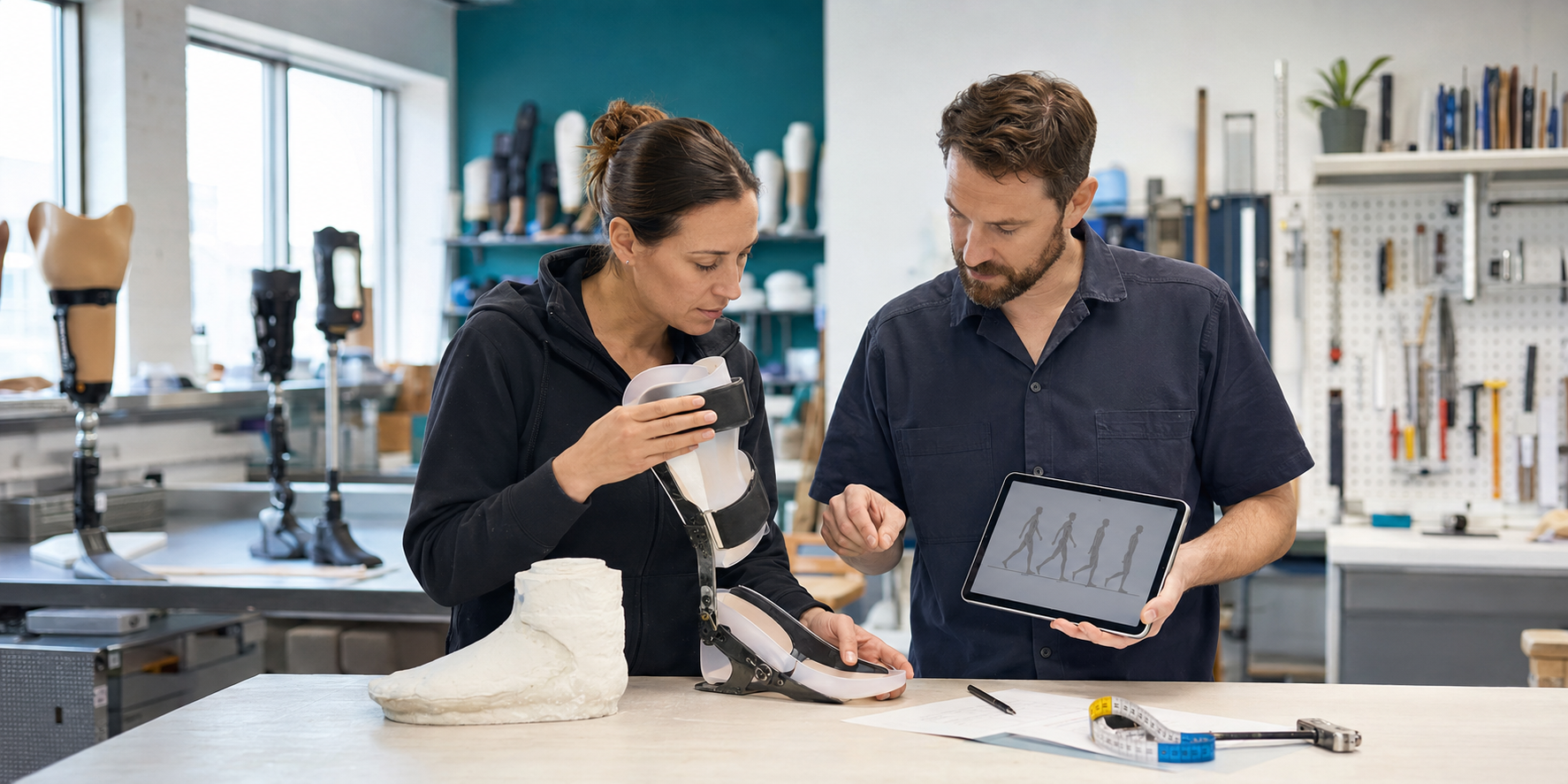
From Clinical Assessment to Fabrication: Teamwork Between the Clinic and Worklab
A custom orthosis passes through many hands before it reaches the patient. The clinician assesses movement and defines the prescription; the worklab translates those findings into material, alignment, trimlines and components; the fitting brings both perspectives together. When these stages operate as separate islands, small communication gaps can become delays, rework or a device that does not fully express the clinical objective.
The worklab needs the clinical “why,” not only the device name. The clinic needs fabrication feedback, not only a delivery date.
A Clear Prescription Starts the Process
“Make an AFO” is not a complete fabrication instruction. The worklab benefits from knowing which motion should be controlled, which movement should remain available, the required ankle angle, expected knee effect, material or flexibility needs, footwear considerations and any skin or volume concerns. Measurements, casts or scans should be clearly identified and checked before fabrication begins.
- Patient and device identification according to approved confidentiality procedures.
- Side, diagnosis, functional problem and intended outcome.
- Joint positions, trimline objectives, components and material requirements.
- Important pressure-sensitive areas, corrections and accommodation needs.
- Required date and the clinical reason for genuine urgency.
The Worklab Should Ask Early
If a prescription conflicts with the cast, scan or model, clarification is most valuable before material is formed. The technician may identify fabrication limitations, missing dimensions, an unsuitable joint location or a component that requires more clearance. Raising these questions early is a contribution to clinical quality—not a delay.
Prioritizing Urgent Cases Together
Postoperative and discharge-related cases may have genuine deadlines, but a workshop has finite staff, machinery and materials. A shared priority system helps distinguish clinical urgency from routine convenience. The clinic provides the medical timeline and patient need; the worklab provides an honest estimate based on process requirements and current workload. This allows management to allocate support without silently displacing another critical case.
Clinical Participation Can Reduce Workload
Where roles, competence and workplace procedures permit, clinicians can support selected steps for their own cases—such as confirming markings, reviewing model corrections, preparing information, assisting with basic modifications or attending critical fittings. This is especially valuable when clinical branches have more than one specialist but the central workshop has limited technical staff. The purpose is not to blur accountability; it is to place informed help where it removes avoidable bottlenecks.
Feedback from Fitting to Bench
A modification request should describe what happened, not only what to add or remove. “Pressure at the navicular during stance,” “heel lifts when the knee flexes,” or “knee hyperextension increased in the intended shoe” gives the worklab a clinical problem to solve. Photographs or markings may help when permitted and handled securely. This information makes it easier to correct the cause rather than repeatedly treating a symptom.
Final Quality Is Shared
The workshop checks construction, finish, joints, fasteners and conformity with the written prescription. The clinician checks fit, skin, alignment, function and patient education. Neither check replaces the other. Delivery should occur only when the device is structurally safe, clinically appropriate and understood by the patient or caregiver.
Case communication should use approved systems and the minimum information needed for care. Patient photographs, records and identifying details should never be shared through informal channels without authorization.
A Practical Communication Rhythm
- Before fabrication: confirm the prescription, information, materials and due date.
- During fabrication: escalate contradictions or material problems before continuing.
- Before fitting: complete bench quality checks and communicate any limitation.
- After fitting: return specific functional feedback and record approved modifications.
- After delivery: schedule follow-up and share lessons that improve future work.
My Workshop Reflection
The best devices are rarely the product of one person working alone. They emerge when clinical reasoning, fabrication skill and patient feedback remain connected from assessment to delivery. Strong clinic–worklab teamwork reduces rework, respects limited human resources and, most importantly, keeps every technical step attached to a meaningful patient goal.
This blog shares general professional experience. Responsibilities must follow local regulations, organizational procedures, professional scope and patient-confidentiality requirements.