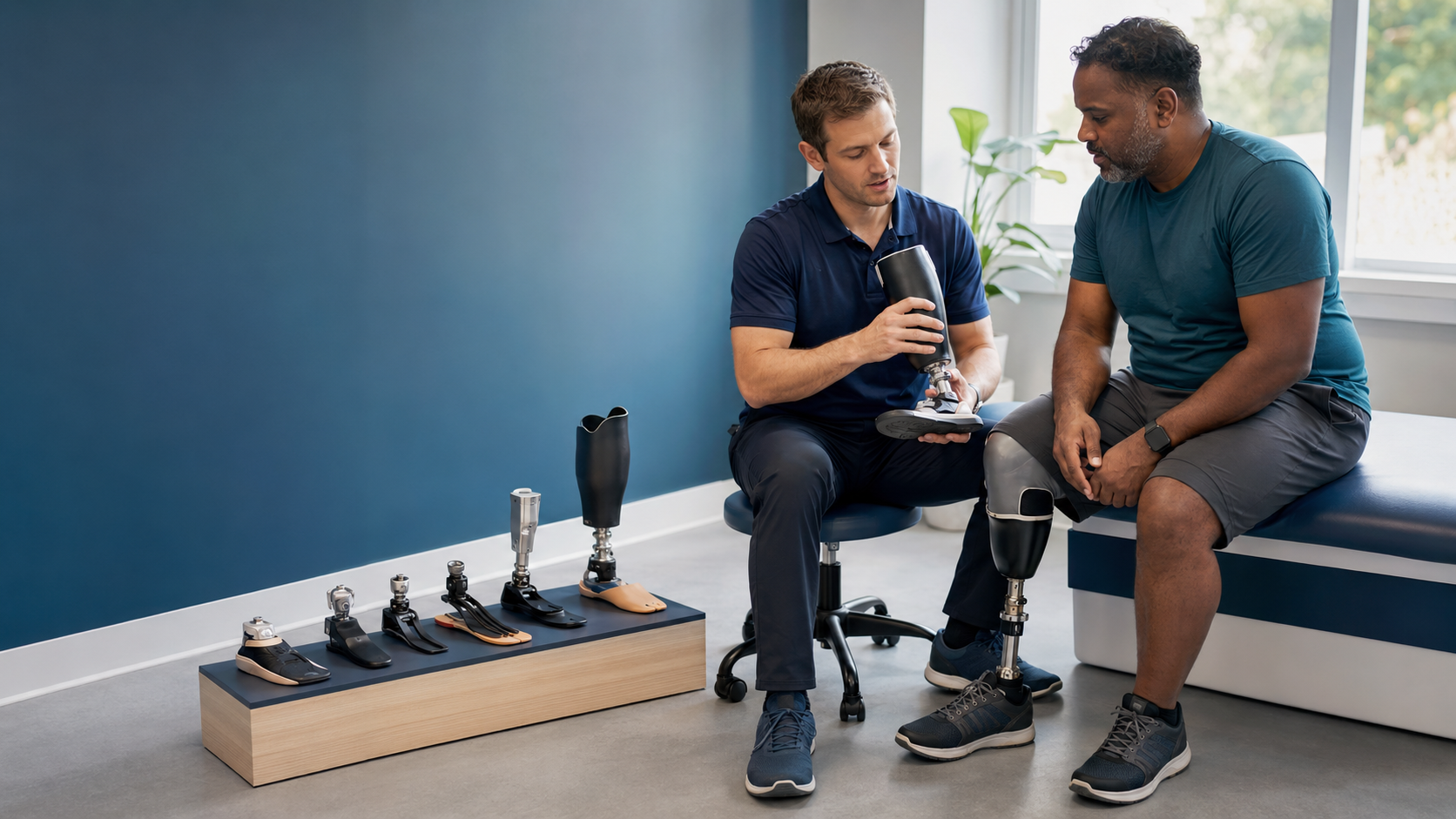
Choosing the Right Prosthesis: A Patient-Centred Clinical Approach
The “best” prosthesis is not automatically the newest, lightest or most expensive device. It is the prosthesis that safely matches the person’s body, health, environment, daily goals and ability to use and maintain it.
Prosthetic prescription is a shared clinical decision. Comfort, safety, reliability and meaningful function matter more than technology alone.
Assessment Comes First
A prosthetist evaluates the level and cause of limb loss, residual-limb shape and skin, joint range, strength, balance, pain, sensation, circulation and general health. The discussion should also cover work, home access, walking surfaces, transport, recreation, footwear, culture, appearance, hand function, vision and access to follow-up care.
Start With Meaningful Goals
- Safe transfers and standing
- Indoor or community walking
- Returning to work, education or family responsibilities
- Managing slopes, stairs or uneven terrain
- Recreation, sport or water activities
- Upper-limb tasks such as grasping, carrying or tool use
Goals should be realistic, measurable and reviewed as rehabilitation progresses.
The Socket Is the Foundation
The socket connects the body to the prosthesis and distributes forces across the residual limb. A sophisticated knee, foot or hand cannot compensate for an uncomfortable socket. Socket design, interface materials and reliefs are selected according to anatomy, tissue tolerance, limb volume, sensation and activity. Persistent pain, wounds or excessive movement inside the socket require review.
Choosing Suspension
Suspension keeps the prosthesis attached. Options may include suction, elevated vacuum, pin or lanyard locking liners, anatomical suspension, straps or belts. Selection considers limb shape, skin, hand function, volume fluctuation, activity, hygiene, cost and the person’s ability to put the prosthesis on correctly.
Components Must Match the Person
Feet and ankles
Basic cushioned feet may provide dependable stability, while multiaxial, energy-storing or microprocessor-controlled units may offer different benefits for selected users. Weight, clearance, footwear and maintenance must be considered.
Knee units
For transfemoral users, knee selection balances stance stability, swing control, cadence, terrain, fall risk, cognitive ability and charging or maintenance needs. Mechanical and microprocessor knees each have appropriate applications.
Upper-limb components
Body-powered, externally powered, passive and activity-specific options differ in feedback, control, appearance, weight, durability and maintenance. Some people benefit from more than one terminal device for different tasks.
Preparatory and Definitive Prostheses
Residual-limb volume can change considerably during healing and early rehabilitation. A preparatory prosthesis may allow safe training while fit and goals evolve. “Definitive” does not mean permanent: sockets and components still need reassessment as the body, activities or clinical needs change.
Rehabilitation Is Part of the Prescription
Training may cover donning, skin inspection, balance, gait, stairs, falls management, energy conservation and device care. Successful outcomes depend on coordinated work between the user, prosthetist, physician, therapist and wider rehabilitation team.
Questions to Ask
- What functional problem will this design solve?
- What are the benefits, limitations and alternatives?
- How will it be maintained, repaired or charged?
- What footwear or accessories are required?
- What warning signs mean I should stop using it?
- When is follow-up planned?
When to Request Review
Contact the clinical team for a wound, persistent redness, new pain, loss of suspension, unusual sounds, damaged parts, repeated falls or a major change in limb volume, body weight or activity. Do not modify structural components yourself.
This article provides general education and does not replace individual assessment by a qualified prosthetist and rehabilitation team.
References: WHO Standards for Prosthetics and Orthotics; MSD Manual: Overview of Limb Prosthetics.