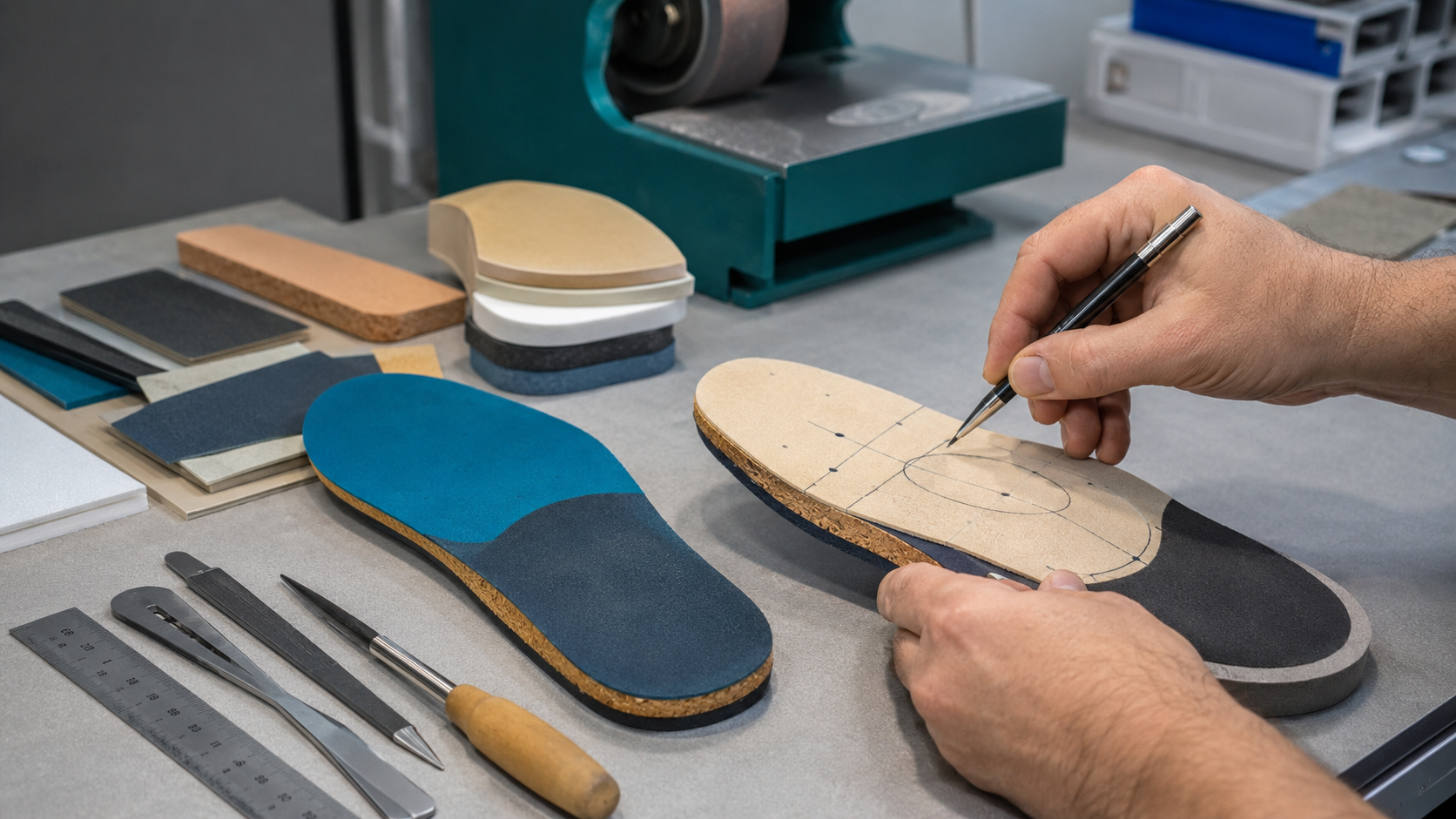
Insole Modification Is a Clinical Process—not Simply Adding More Material
Insole modification is sometimes described as if it were a simple workshop task: add an arch pad, place a wedge, soften the heel or build up one side. In reality, every addition changes the relationship between the foot, insole, shoe and ground. A few millimetres in the wrong position may create discomfort or produce an effect different from the prescription.
Material should be added only when its intended mechanical effect, exact position, thickness and interaction with the shoe are understood.
Start with the Problem—not the Material
The first question should not be “What can we add?” It should be “What are we trying to change?” The target may be a pressure point, painful movement, unstable rearfoot, limited contact, limb-length difference or a need for cushioning. The diagnosis alone does not determine the modification; the physical findings and functional goal do.
Accurate Positioning Matters
A metatarsal pad placed directly under a painful metatarsal head may increase pressure rather than transfer it. An arch addition positioned too far forward may feel like a lump. A wedge that is too long, short or thick can alter load unexpectedly. Markings should follow assessment and, where possible, be checked with the foot and shoe before permanent finishing.
Common Modification Categories
- Pressure relief: creating space or softer transition around a sensitive area.
- Cushioning: selecting a material and thickness that improve impact tolerance.
- Posting or wedging: influencing position, movement or load direction.
- Metatarsal support: transferring pressure proximally when clinically appropriate.
- Heel lift: addressing a confirmed functional need while considering ankle and knee effects.
- Arch contour: improving contact or support without forcing painful correction.
- Top cover and interface: protecting skin, controlling friction and improving durability.
More Material Can Create Less Space
Every layer added to an insole uses internal shoe volume. A thick cushion may feel soft on the bench but create toe pressure, tight fastening or heel slippage inside the shoe. Modification should therefore be checked in the actual footwear, with attention to depth, width and closure.
Build Gradually and Test
Where the condition permits, a staged approach helps determine response. Begin with a clinically reasonable amount, test standing and walking, inspect pressure and ask specific questions. A successful modification should improve the intended outcome without creating a new problem elsewhere.
Patient Feedback Needs Interpretation
“It hurts” is important information, but the location, timing and activity make it clinically useful. Does discomfort occur immediately or after prolonged walking? Is it at an edge, under a prominence or on top of the foot because the shoe became tight? Marking the exact location and observing gait helps the workshop correct the cause rather than repeatedly changing material without direction.
Clinic and Worklab Must Share the Goal
A workshop instruction such as “add medial support” is incomplete without a location, purpose and clinical finding. The clinician should communicate the intended effect and pressure-sensitive areas. The technician should report material limitations, space concerns and any conflict between the request and the existing shape. Final approval comes from fitting the complete system on the patient.
When Modification Is Not Enough
Repeated adjustments cannot always rescue an unsuitable base design, a damaged insole, inappropriate shoe or incorrect prescription. A remake or a different intervention may be required when the device is structurally compromised, the foot has changed substantially or the clinical goal cannot be achieved safely within the available design.
Open wounds, suspected infection, acute unexplained pain, major swelling, vascular concerns or rapidly changing deformity require appropriate medical and multidisciplinary assessment. Workshop modification is not a substitute for diagnosis.
A Practical Modification Record
Good documentation supports continuity and learning. Record the complaint, clinical observation, location, material, thickness, side, intended effect and patient response. This helps future reviews and prevents the same unsuccessful change from being repeated.
My Workshop Reflection
The difference between “adding material” and performing a clinical modification is reasoning. One changes the object; the other aims to change function safely. Careful assessment, accurate placement, controlled fabrication, suitable footwear and follow-up turn a workshop adjustment into meaningful patient care.
This blog shares general professional experience and does not identify any patient, workplace or organization.