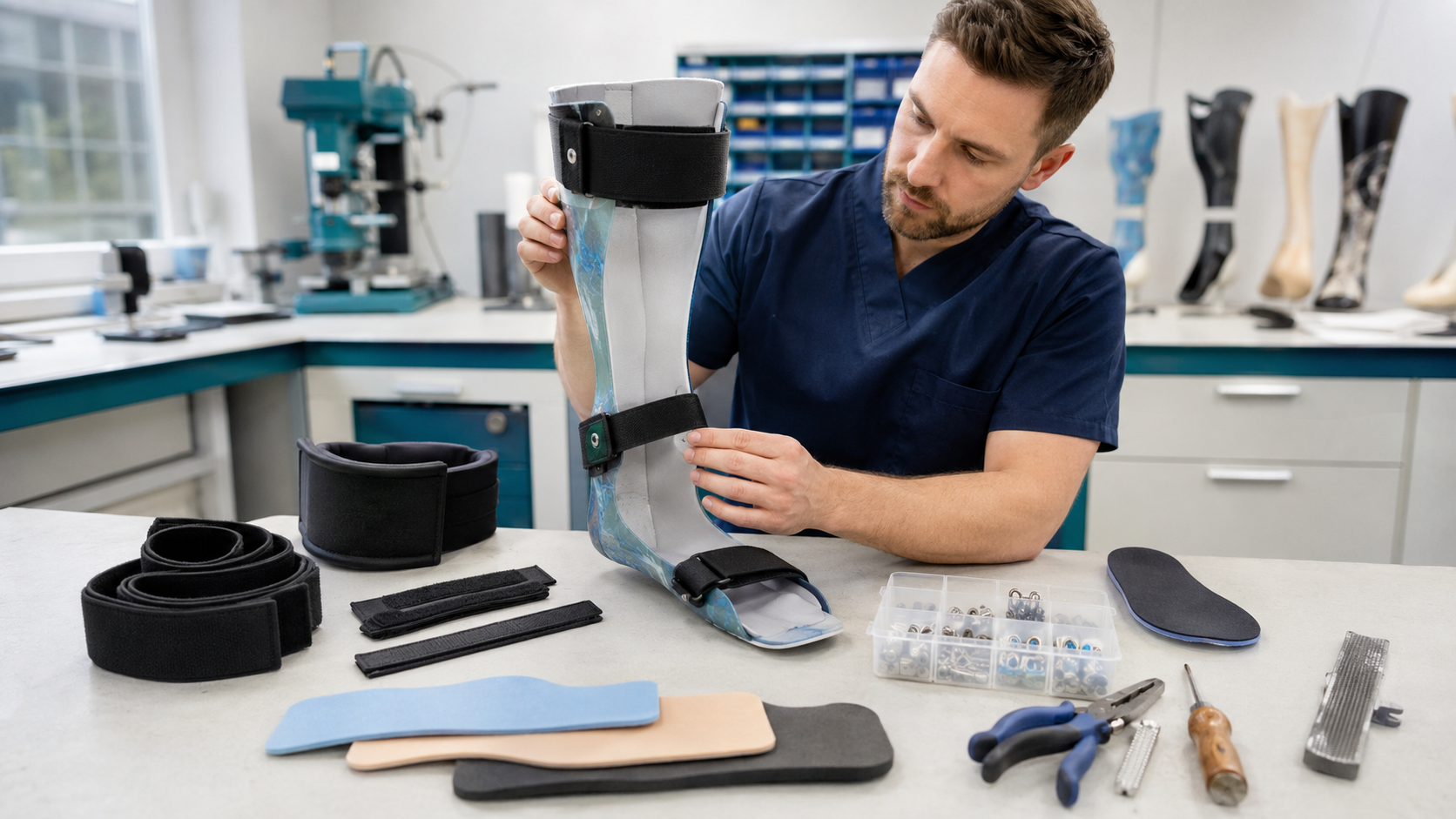
Straps, Padding and Interfaces: Small Components with a Major Clinical Role
A well-molded orthosis can fail if its strap does not hold the limb in the intended position, its padding creates a pressure ridge or its interface traps heat and moisture. These components may look secondary, but they influence control, comfort, skin safety and whether the patient can use the device consistently.
A strap should maintain the prescribed relationship between the limb and orthosis. Padding should distribute or relieve pressure—not hide an incorrect shape or alignment.
What a Strap Actually Does
Straps may suspend a device, seat the heel, control movement, maintain contact or simplify donning. Each strap should have a defined function. Adding more straps does not automatically improve control and can make the device heavier, warmer and harder to use.
Strap Position and Force Direction
The line of pull determines the effect. An instep strap may help draw the heel downward and backward into the AFO. A calf strap maintains proximal contact but should not compress sensitive tissues or pull the leg away from the intended alignment. Correct anchor placement reduces twisting and uneven pressure.
Width, Length and Material
- Wider straps generally distribute pressure over a larger area.
- Narrow straps may concentrate force and cut into soft tissue.
- Length must allow secure fastening without excessive loose material.
- Hook-and-loop strength should match the required load and expected use.
- Stretch material may improve comfort but reduce positional control.
- Materials should tolerate cleaning, perspiration and repeated cycles.
Padding Functions
Padding may cushion an edge, protect a prominence, distribute strap pressure, manage volume or improve total contact. EVA, Plastazote and other foams vary in firmness, resilience, heat response, compression and moisture behaviour. Material selection should match the clinical purpose.
Relief Is Not the Same as Softness
Placing soft foam over a high-pressure area may reduce immediate discomfort but can also reduce space and increase compression. True relief often requires changing the underlying orthotic shape. Padding is most effective when geometry, contact and material work together.
Interface Management
The interface includes everything between the skin and structural device: socks, liners, foam, fabric and strap covers. It affects friction, shear, heat, moisture and pressure. A thicker interface also changes internal volume and may alter how securely the limb is held.
Edges and Transitions
Plastic edges should be finished smoothly before padding is applied. Foam edges should be skived or transitioned rather than ending as abrupt ridges. Adhesive should not create hard lumps, exposed surfaces or skin irritation.
Attachment and Hardware
Rivets, chafes, buckles and anchors must be positioned away from sensitive anatomy and checked for sharp projections. Structural attachment points should have sufficient material around them. Hardware should not loosen, rotate or damage clothing during use.
Donning, Independence and Daily Function
A clinically effective device may still be abandoned if the patient cannot fasten it. Consider hand strength, cognition, vision, caregiver support, clothing and the sequence of application. Colour coding, pull loops or simplified strap order may improve independence when appropriate.
Persistent redness, blistering, numbness, burning, swelling or skin breakdown requires prompt professional review. Patients should not compensate by overtightening, adding unapproved pads or cutting the device.
Delivery Checklist
- Confirm every strap has a defined purpose and correct line of pull.
- Check anchors, rivets, buckles and hook-and-loop security.
- Inspect edge finish and padding transitions by sight and touch.
- Verify the heel and limb remain seated during standing and movement.
- Check circulation, sensation, pressure and skin response.
- Teach the fastening sequence, tension, cleaning and inspection.
- Confirm the patient or caregiver can apply the device safely.
- Arrange review for wear, compression, growth or changing function.
Maintenance and Replacement
Straps stretch, hook-and-loop wears, foam compresses and adhesives deteriorate. These changes can reduce control before the plastic shell itself fails. Follow-up should include components and interfaces—not only the main orthotic structure.
Conclusion
Straps, padding and interfaces convert a structural shell into a wearable clinical system. When selected and fitted thoughtfully, they improve control, comfort and adherence. When treated as an afterthought, they can create pressure, instability and avoidable device rejection.